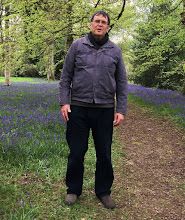
Last week I attended Easter Mass in a suburb of Dieppe, a joyous occasion with
drinks after showing Easter week retains its religious significance among the
French.
Highlight was a conversation with Martin a young man just setting out on a three month walk to Santiago de Compostela. Having given up his job in IT he is set for the priesthood. His joy was part of the joy that overflowed from the Mass led by his mentor Père Geoffroy, the Curé of Dieppe, a remarkable priest I also met and to whom I suggested a visit to Saint Giles.
What impacted me in that brief encounter with the French Church was - I ticked this box myself - a priest enjoying Christianity pointing people at Mass to the joy of faith, and, secondly seeds of faith sprouting into vocation and counter-cultural self-sacrifice.
Martin the mid 20s computer guy shared how the last two years have meant his turning tables on how the world sees poverty, celibacy and obedience. What he shared built on impressions I gained in conversation from 15 young people we hosted here in Holy Week and with my own sons that I want to build from this morning.
I tend to see the young as nothing like poor, chaste and obedient but they - some of them - are rejecting the counsel that money, sex and power are all it’s about and, unless you get loads you'll be a loser.
These conversations came back to me as I read that first lesson from Acts which I'd like us to read again as a mighty reminder of the counter-cultural consequences of the resurrection of Jesus:
The whole group of those who believed were of one heart and soul, and no one claimed private ownership of any possessions, but everything they owned was held in common. With great power the apostles gave their testimony to the resurrection of the Lord Jesus, and great grace was upon them all. There was not a needy person among them, for as many as owned lands or houses sold them and brought the proceeds of what was sold. They laid it at the apostles’ feet, and it was distributed to each as any had need.
What a counter to worldly ways of thinking be they 1st or 21st century!
I think of how first of all the passage counters the fashion of individualism by which each of us does our own thing as something of a default, often with the ready permission of family members - like my trip across the ocean to France which Anne blessed.
To think of individuals and families so impacted by the truth this world is to be lived in the light of future resurrection they became of one heart and soul, and no one claimed private ownership of any possessions! Young Martin is losing all to have the church for his family. I of course do live in a church house - but I have my own down the road for later.
Just landing the thought of sharing life as Christians one lovely feature of St Giles like Sacré Couer is the capacity to share our life together after l'heure de Jesu. As in Dieppe the priest here says a one hour Mass but stays for two hours.
Back to that passage. It has countercultural obedience as well as poverty. As many as owned lands or houses sold them and brought the proceeds of what was sold. They laid it at the apostles’ feet and it was distributed to each as any had need.
Martin has wrestled with what it means to surrender your life to those over you in the Lord. He is part of an authoritative local church, under a charismatic pastor but he himself is under no illusions. Christianity is ideally authoritative but practically it's a matter of putting yourself under authority. He won't always have a charismatic over him but he is set to obey whoever will be over him for the next 40 years.
It made me think of 14 Bishops of different hues I've had over my years, three of Bradford, one of Oxford who selected me for training, two of Sheffield, two of Guyana, one of Coventry, two of London and three of Chichester including Bishop Eric who appointed me to the diocese.
To live as a Christian, let alone as a priest, is to live submissive to the risen Christ and, in bible based ecclesiology, obedient to those over you in the Lord so that, though at times I balk at it, I, we, remain happy to lay our tithe at the apostles’ feet i.e. that of the Bishop and Diocese of Chichester who have oversight of Saint Gilles.
When I ask you to accept my authority it's that the Bishop shares with me and it's in the context both of Christian obedience and of my own and indeed the Bishop's fallibility. The apostolic office calls forth obedience but, as I was sharing the other week, the office bearing person is as much in need of mercy as the next Christian.
These sorts of question were probably little in the minds of the believers described in Acts 4 whose whole lives had been turned upside down by what God did to death through Jesus as we read in the passage. With great power the apostles gave their testimony to the resurrection of the Lord Jesus, and great grace was upon them all.
The Easter season is an opportunity to refresh ourselves as Easter Christians. As such we are or we should be determined to face up to death and other inescapable things in life with an ongoing challenge of the things that deceive us both internal and external. As I listened to Martin I recalled recent conversations with my sons about mortality following their grandmother's death which illustrate one such deceit, namely the one that we'll never die, or that our life in this world should be our only concern.
We have many world views in play and it is the loud voice of so-called relativism that we can believe what we choose. We must answer though for what we choose to believe and a materialistic world view has no answer to a holy God.
John Henry Newman who's now made Saint in France and England said To live is to change, and to be perfect is to have changed often. He also said Fear not your life shall come to an end, but rather that it shall never have a beginning. Meeting, sharing with young people recently who have seen that spiritual beginning. I have been heartened by openness to the only creed which both addresses mortality directly and puts humanity right. As Newman again said - I read him on my break - The name of Jesus can raise the dead and transfigure and beautify the living.
So may this Easter Octave Day eucharist be imbued with great power, grace and freedom as we exalt in the resurrection of Our Lord who transfigures and beautifies us as part of his counter cultural joyous purpose for the world, for France, for the United Kingdom, mid Sussex and Horsted Keynes Saint Giles!
Highlight was a conversation with Martin a young man just setting out on a three month walk to Santiago de Compostela. Having given up his job in IT he is set for the priesthood. His joy was part of the joy that overflowed from the Mass led by his mentor Père Geoffroy, the Curé of Dieppe, a remarkable priest I also met and to whom I suggested a visit to Saint Giles.
What impacted me in that brief encounter with the French Church was - I ticked this box myself - a priest enjoying Christianity pointing people at Mass to the joy of faith, and, secondly seeds of faith sprouting into vocation and counter-cultural self-sacrifice.
Martin the mid 20s computer guy shared how the last two years have meant his turning tables on how the world sees poverty, celibacy and obedience. What he shared built on impressions I gained in conversation from 15 young people we hosted here in Holy Week and with my own sons that I want to build from this morning.
I tend to see the young as nothing like poor, chaste and obedient but they - some of them - are rejecting the counsel that money, sex and power are all it’s about and, unless you get loads you'll be a loser.
These conversations came back to me as I read that first lesson from Acts which I'd like us to read again as a mighty reminder of the counter-cultural consequences of the resurrection of Jesus:
The whole group of those who believed were of one heart and soul, and no one claimed private ownership of any possessions, but everything they owned was held in common. With great power the apostles gave their testimony to the resurrection of the Lord Jesus, and great grace was upon them all. There was not a needy person among them, for as many as owned lands or houses sold them and brought the proceeds of what was sold. They laid it at the apostles’ feet, and it was distributed to each as any had need.
What a counter to worldly ways of thinking be they 1st or 21st century!
I think of how first of all the passage counters the fashion of individualism by which each of us does our own thing as something of a default, often with the ready permission of family members - like my trip across the ocean to France which Anne blessed.
To think of individuals and families so impacted by the truth this world is to be lived in the light of future resurrection they became of one heart and soul, and no one claimed private ownership of any possessions! Young Martin is losing all to have the church for his family. I of course do live in a church house - but I have my own down the road for later.
Just landing the thought of sharing life as Christians one lovely feature of St Giles like Sacré Couer is the capacity to share our life together after l'heure de Jesu. As in Dieppe the priest here says a one hour Mass but stays for two hours.
Back to that passage. It has countercultural obedience as well as poverty. As many as owned lands or houses sold them and brought the proceeds of what was sold. They laid it at the apostles’ feet and it was distributed to each as any had need.
Martin has wrestled with what it means to surrender your life to those over you in the Lord. He is part of an authoritative local church, under a charismatic pastor but he himself is under no illusions. Christianity is ideally authoritative but practically it's a matter of putting yourself under authority. He won't always have a charismatic over him but he is set to obey whoever will be over him for the next 40 years.
It made me think of 14 Bishops of different hues I've had over my years, three of Bradford, one of Oxford who selected me for training, two of Sheffield, two of Guyana, one of Coventry, two of London and three of Chichester including Bishop Eric who appointed me to the diocese.
To live as a Christian, let alone as a priest, is to live submissive to the risen Christ and, in bible based ecclesiology, obedient to those over you in the Lord so that, though at times I balk at it, I, we, remain happy to lay our tithe at the apostles’ feet i.e. that of the Bishop and Diocese of Chichester who have oversight of Saint Gilles.
When I ask you to accept my authority it's that the Bishop shares with me and it's in the context both of Christian obedience and of my own and indeed the Bishop's fallibility. The apostolic office calls forth obedience but, as I was sharing the other week, the office bearing person is as much in need of mercy as the next Christian.
These sorts of question were probably little in the minds of the believers described in Acts 4 whose whole lives had been turned upside down by what God did to death through Jesus as we read in the passage. With great power the apostles gave their testimony to the resurrection of the Lord Jesus, and great grace was upon them all.
The Easter season is an opportunity to refresh ourselves as Easter Christians. As such we are or we should be determined to face up to death and other inescapable things in life with an ongoing challenge of the things that deceive us both internal and external. As I listened to Martin I recalled recent conversations with my sons about mortality following their grandmother's death which illustrate one such deceit, namely the one that we'll never die, or that our life in this world should be our only concern.
We have many world views in play and it is the loud voice of so-called relativism that we can believe what we choose. We must answer though for what we choose to believe and a materialistic world view has no answer to a holy God.
John Henry Newman who's now made Saint in France and England said To live is to change, and to be perfect is to have changed often. He also said Fear not your life shall come to an end, but rather that it shall never have a beginning. Meeting, sharing with young people recently who have seen that spiritual beginning. I have been heartened by openness to the only creed which both addresses mortality directly and puts humanity right. As Newman again said - I read him on my break - The name of Jesus can raise the dead and transfigure and beautify the living.
So may this Easter Octave Day eucharist be imbued with great power, grace and freedom as we exalt in the resurrection of Our Lord who transfigures and beautifies us as part of his counter cultural joyous purpose for the world, for France, for the United Kingdom, mid Sussex and Horsted Keynes Saint Giles!