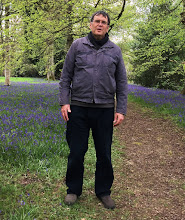
Alas for those who lie on beds of ivory says Amos in the first of three hard-hitting scripture readings this morning.
I wonder what went through Harold Macmillan’s mind as he heard those words and the parable of Dives and Lazarus sitting here in St Giles 25 years ago?
I say so because I have just enjoyed reading Supermac his latest and most authoritative biography by Richard Thorpe who I am hoping we can get to our historical society. It’s a great read - in more sense than one!
Macmillan, Prime Minister 1957-1963, died in 1986, was one of those good all-rounders getting all the rarer in our specialised world. He ticked boxes in the worlds of the university, commerce, the military and religion. His politics were liberal yet conservative, rebel yet loyalist. He was a crofter’s great-grandson yet his father-in-law was a Duke. Possessing all these qualities guarantees personal complexity and an interesting biography.
Great men and women are usually people who have suffered. In this way their humanity appeals through the braving of fear. Macmillan’s courage was forged in the trenches of the First World War and a near death experience in the Second World War. His family life was traumatic but he braved humiliation sticking it seems to Christian principle and refusing to contemplate divorce. The courage he possessed made him his own man. He stood alone in cabinet when he told the aged Churchill his days as Prime Minister needed to end. Macmillan even dared to suggest to Pope Pius XII he would serve Christian unity by recognising the orders of Anglican priests – to be received by silence!
Harold Macmillan was a great wit. Interrupted in a speech by Khruschev banging his shoe on the table at the United Nations he looks up and says quietly, ‘Well, I would like it translating if you would.’ Unveiling a bronze of Mrs Thatcher at the Carlton Club he makes an audible stage whisper, ‘Now I must remember that I am unveiling a bust of Margaret Thatcher, not Margaret Thatcher’s bust.’ On a trip to Russia, told ‘dobry den’ means ‘good day’ he regales everyone with the words ‘double gin’!
His brilliant intellect made him too clever for some, including Churchill who saw him as an opinionated subordinate. Macmillan saw his undergraduate reading parties as the very anticipation of heaven. Throughout his life his work was energised by his reading times. His experience at the sharp end of things did something to redeem his cerebral tendency but a negative image persisted. His Labour political opponent Aneurin Bevan saw him as a poseur. Bevan concluded cruelly that having watched the man carefully for years ‘behind that Edwardian countenance there is nothing’.
His fellow Tory rival Butler was kinder and saw two sides to him ‘the soft heart for and the strong determination to help the underdog, and the social habit to associate happily with the overdog’.
It was this phrase that came to mind as I finished reading Macmillan and started reading the scripture set for the 17th Sunday after Trinity in the third of our three year cycle.
Amos thundered against those who like ivory couches. Like Macmillan many of us have a tendency to associate happily with the overdog, like the Rector of Horsted Keynes – I am the Rector of Horsted Keynes. Like my predecessors I have access to people at the top of the academic, political, commercial and military worlds as this goes with the job alongside its more humble pursuits . I know Fr Mark Hill-Tout read to Macmillan in his final illness. A previous Rector allowed Macmillan to change the lectionary reading the Sunday Churchill died to ‘let us now praise famous men’. Dorothy Baxter, now 96, will tell you how Macmillan used to keep the choir in order.
This is not a ‘books I have recently read’ sermon – I am getting to the point, believe me!
Macmillan once said ‘It is thinking about themselves that is really the curse of the younger generation...a curious introspective attitude towards life, the result no doubt of two wars and a dying faith’.
The danger of self-absorption lies behind what prophet Amos, Saint Paul and Our Lord and Saviour are speaking of in this morning’s readings.
Those who want to be rich fall into temptation and are trapped by many senseless and harmful desires that plunge people into ruin and destruction says Paul. For the love of money is a root of all kinds of evil, and in their eagerness to be rich some have wandered away from the faith and pierced themselves with many pains. Those pains are described in the chilling parable I read chosen for today’s Gospel. Chilling is hardly the word for it describes the fires tormenting Dives – the rich man – on account of his neglect of poor Lazarus. Remember that during your lifetime you received your good things, and Lazarus in like manner evil things; but now he is comforted here, and you are in agony. Besides all this, between you and us a great chasm has been fixed, so that those who might want to pass from here to you cannot do so, and no one can cross from there to us.
It is always chilling to encounter people whose self-absorption with pleasing themselves has made them totally indifferent to the needs of those around them. I think for a start of the people who walk across Victoria station texting away and bumping into everyone else – but I wouldn’t quite wish them hell fire!
Let me go back to Macmillan. He possessed a clear sense of divine providence working through the historical events that propelled his career and the illness that saved his addressing the prime ministerial succession. To his Christian sensibilities we owe the appointment of two of the Church of England’s most famous 20th century clerics, Michael Ramsey to Canterbury and Mervyn Stockwood to Southwark.
What is evident in Richard Thorpe’s biography, which brings out the Christian side, is Macmillan’s own sadness in his later years at the self-preoccupation that seemed to have grown up in the wake of the decline in Christian allegiance. He ends the book quoting his call to ‘restore and strengthen the moral and spiritual as well as the material’ rather countering the materialist ‘you’ve never had it so good’ association people make with Harold Macmillan.
Today’s scripture is a wake-up call. Rather as David Cameron said to the Pope last Sunday Christian faith is something to make us ‘sit up and think’. If we really believe in God this should take us out of ourselves and waken us up to the realities around us, both God and neighbour, whose service brings perfect freedom in this world and the next.
Among these realities are the eight Millennium Development Goals which take us into the global politics Harold Macmillan served for so many years. These eight goals all 192 United Nations member states and at least 23 international organizations have agreed to achieve by the year 2015. They are:
• To eradicate extreme poverty and hunger
• To achieve universal primary education
• To promote gender equality and empower women
• To reduce the child mortality rate
• To improve maternal health
• To combat HIV/AIDS, malaria, and other diseases
• To ensure environmental sustainability
• To develop a global partnership for development
If today’s gospel says anything it is a warning about the failure of partnership and its consequences.
The rich man was guilty not of being rich but of being a bad steward of his possessions. By God’s generosity he possessed, as we possess, an awful lot, and yet he would not imitate that generosity by sharing with those in need, with Lazarus ‘who longed to satisfy his hunger with what fell from the rich man’s table’.
Today’s scripture is hard hitting. The needs of the world are very urgent. UN Secretary-General Ban Ki-Moon has said ‘World military spending has now risen to over $1.2 trillion dollars. This incredible sum represents 2.5% of Gross Domestic Product. Even if 1% of it were redirected towards development, the world would be much closer to achieving the Millennium Development Goals’.
God raise up new Macmillan’s to work in politics for these ends, and raise up generosity in his people here, not least in our support for St Anne’s Hospital, Tanzania in today’s charitable giving.
God free us from ourselves through the eucharist, the thanksgiving for his love we offer day by day, to be more centred on his heart which encompasses poor and rich, near and far. So be it.
Sunday, 26 September 2010


Trinity 17 26th September 8am
Go and sit down in the lowest room…for whosoever exalteth himself shall be abased; and he that humbleth himself shall be exalted.Luke 14v11
The Gospel is no hand book on dining etiquette. It’s a parable, Jesus says, a story with a moral. The moral is aimed at those who saw their obedience to God earning them a place at God’s side. Jesus announces in both his words and his deeds a revolution in religious thinking. To be at God’s side you need to renounce any worthiness you think you’ve got to be placed there.
When we look at how Jesus managed power he seems to have made a point of giving it up wherever he could, passing praise for his healings on to his Father, emptying himself for others to suffer and die. He is supremely the humble one who has been exalted by his glorious resurrection.
Christianity isn’t a straight forward sort of religion. It’s full of paradoxes, things that contradict in logic but that God shows us we have to hold together in the practice of faith and life.
God is the be all and end all - yet human beings can live without him. Jesus isn’t God and he isn’t man - he’s God and man. Ultimate reality has three persons - but they are also one God. Believers live by God’s providence - but they live their own lives. The bread and wine we share taste like bread and wine - but they are the body and blood of Christ.
I could go on. The paradox of today’s scripture is that God is the same as us and yet he’s different from us. He’s a personal being who made us like himself. He’s also out of this world and can’t be fitted into worldly standards.
Here’s a parable that tries to explain the paradox in today’s Gospel.
Each year the President of the nation had a banquet in the palace for all his employers at which ministers and the accredited diplomats sat side by side with civil servants, cleaners and gardeners. As the meal got under way one of the gardeners, overwhelmed by the occasion and a bit thirsty, picked up his water filled fingerbowl and drank from it. People laughed. Quick as a flash the President realized both the error of his gardener and the cruelty of the mocking laughter. The President took hold of his own fingerbowl, though put there to clean diners’ fingers and not for drinking, and drank from it himself. This wiped the smiles off the faces of those who had mocked the poor gardener. Some of them felt so awkward they followed the President and drank themselves from their finger bowls.
How slow we can be as Christians to see the central paradox of our faith - the way to God is through seeking humility. The Pecking Order isn’t at all like the pecking order most people identify.
In making the best of who we are and the gifts we’ve been given, through all the choice of shades of grey we choose between, unless we have that over arching desire to be with Jesus who descends to greatness all we do can be nothing worth.
In the course of my ministry I have met people who have chased a dream of success and power over relentlessly. Their neglected families had paid the price for this so that the people they thought they were working for in the end got literally divorced from them. They were left emotionally and physically broken. Their worldly achievements actually mocked them rather than rewarded them.
As Christians we worship a God who is far from this sort of dis-connectedness. The God shown us in Jesus has no ‘better faster alone than slower together’ upward mobility about him at all.
'The Word became flesh and dwelt among us'. He came, and in coming announced his 'downwardly mobility'. Eternal Truth came to be fleshed out in a stable so we could know him and flourish as people loved by him. He comes to us to this day in the humble obscurity of bread and wine
I want to end with a quote from Henri Nouwen, a priest who had a great ministry to the mentally handicapped:
People seek glory by moving upward. God reveals his glory by moving downward. If we truly want to see the glory of God, we must move downward with Jesus. This is the deepest reason for living in solidarity with poor, oppressed and handicapped people. They are the ones through whom God's glory can manifest itself to us. They show us the way to God, the way to salvation.
As Jesus says to us this morning Go and sit down in the lowest room…for whosoever exalteth himself shall be abased; and he that humbleth himself shall be exalted.
Sunday, 19 September 2010
Trinity 16 19th September 2010
God our Saviour desires everyone to be saved and to come to the knowledge of the truth. (1 Timothy 2v3-4)
I have other sheep that do not belong to this fold. I must bring them also (John 10v16)
Christianity is a draw.
We are drawn here this morning by a Saviour’s desire to save and gather his flock.
I must bring them also. Jesus says. And so he is working always in the world to draw people’s attention and bring them into his church so that they in turn may be a draw.
It’s helpful to think of God as a magnet who is magnetising the church to be a draw to those as yet outside of her.
Bishop Walsham How caught something of this in the second verse of his hymn, ‘O my Saviour lifted’:
Lift my earth-bound longings,
fix them, Lord, above;
draw me with the magnet
of thy mighty love.
When we baptise people we enfold them in God’s powerful radiance and make them spiritually magnetic.
They are then capable of growing in their own magnetic force and of drawing others to the love of God.
In baptism we are given a special capacity for God like iron filings have capacity to get shaped up by a magnet.
I would not be standing here nor you sitting there without such magnetism of the Spirit. We are all drawn into the Christian community by the drawing power of others. My own Christian commitment traces back to the example and drawing power of my parents, of friends at my Oxford College, of a holy priest or two, of countless individuals right down to my time here in Horsted Keynes.
Reading the lives of the saints has been an important influence on me. It’s a good counter to the rubbish we often find ourselves reading if we don’t plan to read things that will build us up.
I remember not so long back reading the autobiography of Bishop Helder Camera who died in 1999 having spent his life in the service of the Brazilian poor. He abandoned his Bishop’s palace to live among the poor and hitched lifts instead of riding in his official car. When I give food to the poor, they call me a saint, he used to say. When I ask why the poor have no food they call me a communist.
He was always controversial, a great pioneer of the social gospel.
Camera writes of the spiritual magnetism that steered the direction of his life, notably an encounter with a Cardinal he once helped run a Church Congress in Rio de Janeiro. This man, moved by what he saw of Rio’s shanty towns, suggested Camera would be better putting his organising talents to the service of the poor. He writes: And so the grace of the Lord came to me through the presence of Cardinal Gerlier. Not just through the words her spoke: behind his words was the presence of a whole life, a whole conviction. And I was moved by the grace of the Lord. I was thrown to the ground like Saul on the road to Damascus.
A chance conversation proved to have enormous force, for Camera, and for the poor of Brazil.
The magnetising of the interior life of one man of God by another brought about wonders for the world through the extraordinary possibilities of God.
When a baby or infant is baptised they are given the capacity to receive God’s love in Jesus Christ through others. Their parents and godparents, who share their love for one another with their children, go further to share with their children their love for God.
If parents are seeking God they have in a sense already found Jesus. You can’t seek something you haven’t in some sense found already. Your love for God, my love for God, is actually measurable by our desire to seek God and especially on the occasions when we can’t seem to find him.
Like with magnetism we’re drawn to God from outside of ourselves as well as from inside of ourselves, drawn by our contemplation for transformation and for the transformation of others.
Pope Benedict, who this morning beatifies former Anglican priest John Henry Newman, has written helpfully against people’s negative perception of the Christian church:God rejects no one. The Church rejects no one. Yet in his great love God challenges all of us to change and become more perfect.
This saying of the Pope echoes our second reading from1 Timothy: God our Saviour desires everyone to be saved and to come to the knowledge of the truth.
God draws us – but he also challenges us to get shaped up to be more like Jesus since he desires our salvation.
We need saving from ourselves – from our sin, fear, sickness, doubt and despair as well as from death and the devil!
The question is do we want to be changed in this way? Do we want to be saved? To be shaped up to be like Jesus?
In the baptism service the parents and godparents say they do. They want their children to be shaped up in this way, magnetised by the mighty love of God set forth in Jesus Christ.
Justin and Liz want this for Jessica, Rebecca, Brandon, Paul and Emily. They want their family to have more of the love, joy and peace of Jesus so that others may be drawn to Jesus through them.
They are grateful for their children and want the best for them.
They also struggle, as we all do, with the workings of God. Little Brandon’s brain tumour has been allowed even if it is not God’s will that he or we suffer such sickness. It is natural that we pray healing for Brandon at his baptism as well as trust and patience for his mum and dad and brothers and sisters.
Today’s readings remind us of the need to trust the power of God that is working to draw everyone to himself through their circumstances. Next Sunday is Back to Church Sunday and we have a chance to implement this morning’s word from God by inviting someone to come to St Giles with us next Sunday.
When it comes to drawing people back to church the secret is the contemplation of Jesus which deepens our spiritual magnetism.
So we turn once more to contemplate magnetic Jesus, to reflect on his word, to gaze on him in the holy sacrament of his body and blood, praying that we will be drawn to him more and be made ourselves more of a draw for Jesus to build his body, the church and who reminds us this morning I have other sheep that do not belong to this fold. I must bring them also (John 10v16)
Sunday, 29 August 2010
West Hoathly evensong Trinity 13 29th August 2010
I was in Eastbourne some time back walking on the promenade. Something landed beside me.
It came from a seagull – and, no, it wasn’t what you might expect!
It was a clam. The bird was continually dropping the shellfish until it broke.
Powerless to break into the clam by its own strength, the seagull invoked a higher power, that of gravity. By working with gravity the bird got its dinner.
This remarkable scene reminded me of how many an impenetrable problem – even a pastoral vacancy - can yield when we have the humility of faith to call upon a higher power to assist us.
In Jesus God has come to us, is ready to give himself to us, and is able to help us grow to rely on him more and more in all circumstances of our life.
We only need to take on board the invitation of Jesus to humble ourselves with confidence in his provision.
He must increase, but I must decrease we heard in the second reading from St John’s Gospel chapter 3v30. This is a call to humility.
He whom God has sent speaks the words of God, for he gives the Spirit without measure, verse 34.
What a wonderful promise! There’s nothing in short supply for those who take God at his word. As Isaiah promised in chapter 33 verse17 Your eyes will see the king in his beauty.
How could that vision of God be possible for us in our own strength?
Yet God, who loves us through and through, has promised it.
The same promise of the beatific vision is found amplified in the
first letter of St John chapter 3: See what love the Father has
given us, that we should be called children of God; and that is
what we are. The reason the world does not know us is that it did
not know him. Beloved, we are God’s children now; what we will
be has not yet been revealed. What we do know is this: when he is revealed, we will be like him, for we will see him as he is. And all who have this hope in him purify themselves, just as he is pure.
We will see him as he is...Your eyes will see the king in his beauty. What promises!
Though God calls us to decrease in ourselves he sets before us the heavenly promises referred to in today’s collect.
To be a Christian we need twin virtues – confidence in God and humility before him.
To have Christian faith is to say yes to God’s promises freely and wholeheartedly, to open our hands to welcome his mighty provision to reach into the waywardness and poverty of our lives.
This is what we mean by having faith - saying yes to what God promises, freely and wholeheartedly, trusting him with the whole self. Saying yes with humility, knowing we’re not actually the centre of things however much our senses delude us into thinking so.
Faith isn’t sophisticated beliefs, strong convictions, or some sort of moral perfection.
It’s a readiness to reach out and receive from Jesus.
Faith is less something we have and more something we do.
God has far more riches in his treasury of grace. They’re on offer. You need faith to lay hold on God’s grace. That means a readiness to open your hands to receive.
To live by faith is to live humbly with confidence in God’s empowerment!
The seagull couldn’t get the clam open but saw a helper in his situation so he could get his dinner.
We’re looking ahead as a church and as individuals.
We face many situations both as a church and as individuals that we need to approach not with the clenched fists of battle but with the open hands of faith.
Maybe God is laying on these situations to build our faith, to teach us wisdom and make us more open to his power from on high.
By faith we come to welcome the riches God has for us in Jesus. We discern God's loving wisdom and direction for our lives.
By faith we are sustained through disappointments, frustrations, and failures.
Faith is possible for all. It is a simple turning to God as we are.
This is what St Margaret’s is all about – and St Giles – our prayers are very much with you at this time.
Humble yourselves therefore under the mighty hand of God, writes St Peter (1 Peter 5) that he may exalt you in due time.
With two wings, humility and confidence in God’s word we lift ourselves heavenwards like the seagull and see the impossible made possible.
Trinity 13 Sunday 29th August 2010
How do you make the best of who you are and the gifts you’ve been given?
We do so day by day not so much by choosing between black and white but through choosing the lesser shade of grey. We do so as Christians also with an eye to more than self advancement.
The Gospel and its matching first reading hardly need a commentary. Pride was not created for human beings, we heard from Ecclesiasticus. Later on we heard from Luke Chapter 14: Go and sit down at the lowest place…for all who exalt themselves will be humbled, and those who humble themselves will be exalted.
The Gospel is no hand book on dining etiquette. It’s a parable, Jesus says, a story with a moral. The moral is aimed at those who saw their obedience to God earning them a place at God’s side. Jesus announces in both his words and his deeds a revolution in religious thinking. To be at God’s side you need to renounce any worthiness you think you’ve got to be placed there.
This quality of humility isn’t passive however, or a matter of speaking hollow words like the ritual ‘yes man’ Uriah Heep. Its an active quality. Humility is a call to downward mobility with Jesus. This is the thrust at the end of the Gospel. When you give a luncheon or a dinner, do not invite your friends or your brothers or your relatives or rich neighbours, in case they may invite you in return, and you would be repaid. But when you give a banquet, invite the poor, the crippled, the lame, and the blind. And you will be blessed. (Luke 14v12-14)
When we look at how Jesus managed power he seems to have made a point of giving it up wherever he could, passing praise for his healings on to his Father, emptying himself for others to suffer and die. He is supremely the humble one who has been exalted by his glorious resurrection.
Christianity isn’t a straight forward sort of religion. It’s full of paradoxes, things that contradict in logic but that God shows us we have to hold together in the practice of faith and life.
God is the be all and end all - yet human beings can live without him. Jesus isn’t God and he isn’t man - he’s God and man. Ultimate reality has three persons - but they are also one God. Believers live by God’s providence - but they live their own lives. The bread and wine we share taste like bread and wine - but they are the body and blood of Christ.
I could go on. The paradox of today’s scripture is that God is the same as us and yet he’s different from us. He’s a personal being who made us like himself. He’s also out of this world and can’t be fitted into worldly standards.
Here’s a parable that tries to explain the paradox in today’s Gospel.
Each year the President of the nation had a banquet in the palace for all his employers at which ministers and the accredited diplomats sat side by side with civil servants, cleaners and gardeners. As the meal got under way one of the gardeners, overwhelmed by the occasion and a bit thirsty, picked up his water filled fingerbowl and drank from it. People laughed. Quick as a flash the President realized both the error of his gardener and the cruelty of the mocking laughter. The President took hold of his own fingerbowl, though put there to clean diners’ fingers and not for drinking, and drank from it himself. This wiped the smiles off the faces of those who had mocked the poor gardener. Some of them felt so awkward they followed the President and drank themselves from their finger bowls.
How slow we can be as Christians to see the central paradox of our faith - the way to God is through seeking humility. The Pecking Order isn’t at all like the pecking order most people identify.
Let the same mind be in you that was in Christ Jesus, who, though he was in the form of God, did not regard equality with God as something to be exploited, but emptied himself, taking the form of a slave, being born in human likeness. And being found in human form, he humbled himself and became obedient to the point of death—even death on a cross. Philippians Chapter Two (v5-8).
In making the best of who we are and the gifts we’ve been given, through all the choice of shades of grey we choose between, unless we have that over arching desire to be with Jesus who descends to greatness all we do is nothing worth.
What are you doing with your life that will last forever? That’s the question we need to be asking ourselves – and Jesus asks it in the Gospel when he challenges those who seek upward mobility.
Christ’s humility was rewarded, as that passage from Philippians confirms, by his being highly exalted… and given the name that is above every name. So it is for us as we choose from time to time a lower pathway in worldly terms.
In the course of my ministry I have met people who have chased a dream of success and power over relentlessly. Their neglected families had paid the price for this so that the people they thought they were working for in the end got literally divorced from them. They were left emotionally and physically broken. Their worldly achievements actually mocked them rather than rewarded them.
As Christians we worship a God who is far from this sort of dis-connectedness. The God shown us in Jesus has no ‘better faster alone than slower together’ upward mobility about him at all.
'The Word became flesh and dwelt among us'. He came, and in coming announced his 'downwardly mobility'. Eternal Truth came to be fleshed out in a stable so we could know him and flourish as people loved by him. He comes to us to this day in the humble obscurity of bread and wine
As Christians we have truth, words to share but they are most effective when fleshed out in a loving and authentic way. People today, especially young people, need witnesses before they need teachers in the strict sense. They look for integrity. When they see humility in action it can be intriguing to them, even if they can also exploit it. As people exploited Jesus they will go for us to!
I want to end with a quote from Henri Nouwen that rejoices in the God who is 'downwardly mobile' and can be encountered in the service of the needy. Nouwen was an academic priest who chose in his last years to work among the mentally handicapped. This is the quote from his memorial volume, 'The Road to Daybreak':
People seek glory by moving upward. God reveals his glory by moving downward. If we truly want to see the glory of God, we must move downward with Jesus. This is the deepest reason for living in solidarity with poor, oppressed and handicapped people. They are the ones through whom God's glory can manifest itself to us. They show us the way to God, the way to salvation.
As Jesus says to us this morning When you give a banquet, invite the poor, the crippled, the lame, and the blind. And you will be blessed… Go and sit down at the lowest place…for all who exalt themselves will be humbled, and those who humble themselves will be exalted.
Trinity 13 29th August Luke 10v23-37 BCP 8am
The Parable of the Good Samaritan reminds us that looking to the needs of others as true neighbours brings joy both to them and to us.
A teacher found that most of her class got through their reading work very quickly. This made it hard for the slow readers and hard to keep discipline.
She found an answer to the problem that made everyone happy. When the fast readers finished they were set the task of helping the slow readers. In this way the class stayed very happy whenever it came to reading time.
The children were given a task of service and in fulfilling that task they rose above their inadequacies into joy.
So it is, to come back to you and I, that Jesus doesn’t promise us joy other than in facing our limitations and then reaching out beyond them into his service and the building up of his kingdom.
We’re not encouraged to delight or find happiness in ourselves, much as he loves us, but in putting ourselves to his work.
I looked for my soul, but my soul I could not see.
I looked for my God, but my God eluded me.
I looked for my brother and I found all three.
Joy comes as we repent, or turn away from our own selfish desires towards God and neighbour.
Happiness is self-forgetfulness. It can’t be worked up. It’s worked out.
How is it worked out?
Firstly by working out our sin and short-comings and confessing them. This is a vital discipline we do on our own but there is a sacrament available. As we could have read to us later in this service from the Book of Common Prayer, it might be that some of you requireth further comfort or counsel; let him come to me, or to some other discreet and learned Minister of God’s Word, and open his grief; that by the ministry of God’s holy Word he may receive the benefit of absolution, together with ghostly counsel and advice, to the quieting of his conscience, and avoiding of all scruple and doubtfulness. Priests are ordained to provide absolution. Appointments are possible at St Giles even!
Joy comes firstly as we repent, or turn away from our own selfish desires towards God and secondly as we set ourselves to the service of our neighbour, directing our energies outside of ourselves.
In doing all of this – facing inadequacy, rising above it, pushing ourselves outwards in service - we receive a ‘buzz’ and that ‘buzz’ is as near to happiness as we ever get on this earth.
We find the deepest joy through letting Jesus show us more of our inadequacy and our need for him - for only by depending upon him can we reach full potential.
What a strange process it is, this growing to full potential within the Communion of Saints.
We start life dependent upon our parents.
We struggle towards independence.
Our fulfilment though lies in achieving interdependence with others.
God grants us our independence not that we may go our own way but that we may choose to depend upon him as we turn our lives to the common good.
To live as Jesus Christ promised – as the children of God – is a calling to interdependence. This is a state of joy, one that openly proclaims our individual inadequacy and our reconciliation to God and neighbour.
For there is no joy for those without a sense of inadequacy in the ultimate picture of things!
So we come to the Lord through the confession of sin, not trusting in our own righteousness but in his manifold and great mercies.
We come seeking afresh the joy of the Lord who can bind up the wounds within us, pour in his healing balm and set us afresh on the path of service.
Sunday, 22 August 2010
Trinity 12 Sunday 22nd August
I want to look this morning at the second reading from the fourth chapter of the letter to the Colossians. In this passage St. Paul invites his readers to: devote yourselves to prayer, being watchful and thankful. 3And pray for us, too, that God may open a door for our message, so that we may proclaim the mystery of Christ.
What does it mean to reach someone for Christ?
Only the Holy Spirit can reach people for Christ. Our task is to be there for people as we invoke the Spirit on them – and not to get in God’s way. Know what I mean? To really care for folk, to be alongside them, but only pushy in our prayer!
Our day by day ministry as Christians is as verse 4 expresses it to proclaim the message clearly, as I should. Part of this clear proclamation is our engagement with questions people have about Christian faith, something I have myself been very active in resourcing with Premier Christian Radio and as Diocesan apologetics consultant.
In this month’s Chichester Magazine I have commended a book which we’re holding a discussion on in November. Here it is, Timothy Keller’s The Reason for God. We’re getting copies for people (they cost £5) hoping a good number of us will use it to dust the cobwebs off their past Christian formation, confirmation classes or whatever. I am also commending my own Firmly I Believe which answers questions about forty areas of believing concerning the creed, sacraments, commandments and prayer.
Commercials over – back to our scripture!
Proclaim the message clearly…know how to answer everyone This advice in verses 4 and 6 of Colossians 3 parallels that of St. Peter in his first letter chapter 3v15 where he says Always be prepared to give an answer to everyone who asks you to give the reason for the hope that you have. But do this with gentleness and respect Peter says.
Talking of ‘respect’ Narnia author C.S.Lewis wrote about a lady he knew who spent her life on other people. He said you could tell the people by their hunted look!
5Be wise in the way you act toward outsiders; Paul continues in verses 5 and 6 of Colossians Chapter 4, make the most of every opportunity. 6Let your conversation be always full of grace,
What does it mean to reach someone for Christ? Mission is about getting attuned to people and to God so they may both connect, which makes us bridge-builders. Jesus though is the real bridge, the bridge over troubled waters.
Pray… that God may open a door for our message, so that we may proclaim the mystery of Christ.
We can’t open the doors of people’s hearts but Jesus can. Is anything too hard for the Lord?
There’s a team poised this morning to get us working towards Back to Church Sunday on 26th September. My job this morning is to present the basic scissor strategy of church growth.
Show scissors Very obvious – two blades – prayer and invitation. The church grows as her members pray for people to experience God and invite them on occasion to join with God’s people. Back to Church Sunday is such an occasion and you’ll be hearing more on this at the end of the eucharist.
First prayer. Pray… that God may open a door
The Norwegian writer on prayer, Professor Hallesby writes these inspiring and helpful words: The work of prayer is prerequisite to all other work in the kingdom of God, for the simple reason that it is by prayer that we couple the powers of heaven to our helplessness, the powers which can turn water into wine and remove mountains in our own lives and the lives of others, the powers which can awaken those who sleep in sin and raise the dead, the power which can capture strongholds and make the impossible possible.
To be missionary isn’t about knocking on doors so much as inviting God to do so – to knock on heart doors. Mission Horsted Keynes and surrounds is calling you! The Rector is pleading with you to serve in an executive capacity. You don’t however necessarily need to meet with him or the Back to Church Sunday organisers of to be in that ‘executive’ capacity. You need rather to promise to meet daily with Jesus Christ on behalf of Horsted Keynes and its surrounds, including your own friends and families who live without the blessings of faith and this will indeed make you mission ‘executives’. It is by prayer that we couple the powers of heaven to our helplessness ...the powers which can awaken those who sleep in sin and raise the dead, the power which can capture strongholds and make the impossible possible.
So many are losing out on the blessings of faith! We want some from among our acquaintance, as the Lord leads, to open their hearts and discover the possibilities of God - the very possibilities that operate among us here as members of St. Giles Church.
So in the coming month I’m inviting action – we’re going to act. I’m asking you each day to pray for the growth of the church mentioning particular individuals known to you upon whom you desire God’s richest blessing.
It may be a matter of praying the Our Father slowly, ‘Thy Kingdom come’ in Horsted Keynes, in Mid-Sussex, in the life of my friends.
It may be a matter of fasting a little for the special Sunday maybe on Fridays the day Jesus died, or of coming to an extra service, of saying a prayer of our own like, ‘Lord Jesus draw her to yourself’ with a special intention for each of those on your prayer list.
We have, as the news sheet indicates, a visit on Saturday week at 8am from the Mid-Sussex prayer walk sponsored by The Point Anglican network Church in Burgess Hill. Every Saturday though at 8am we have Prayer for St Giles – just half an hour –open to all!
Intercession has been described as ‘love on its knees’. Dr. Norman Vincent Peale writes: Personally I believe that prayer is a sending out of vibrations from one person to another and to God. All the universe is in vibration. There are vibrations in the molecules of a table. The air is filled with vibrations. The reaction between human beings is also vibrations. When you send out a prayer for another person, you employ the force inherent in a spiritual universe. You transport from yourself to the other person a sense of love, helpfulness, support - a sympathetic, powerful understanding - and in this process you awaken vibrations in the universe through which God brings to pass the good objectives prayed for.
We have a mini mission coming up at St Giles in a month’s time - and you’ve got a place on the executive committee - you are to act - by the prayer you offer over the next month and by the invitations you will give out to your friends and acquaintances.
Someone once said ‘prayer is doing business with God and is every bit as practical as any earthly transaction’.
Prayer is very practical. It also requires a right attitude, one of wholeheartedness. So I ask you this morning:
Do you think it is the will of Our Lord for the Christian faith to spread in this land and his church to grow? Scripture says yes!
Take John 10:16: I have other sheep that are not of this sheep pen. I must bring them also. They too will listen to my voice.
Or 1 Timothy 2:3: This is good, and pleases God our Saviour, who wants all men to be saved and come to a knowledge of the truth.
Prayer is the first blade of the church growth scissor strategy cutting a way forward for God. Then, the second blade – invitation.
I want to ask you, do you think we at St. Giles have something that the friends we are called to pray for are missing out on? In our worship here, and in the several strands of our outreach?
We need to believe this if our prayer is to be wholehearted.
Let me put it the other way around. How will you feel when the friend or neighbour you’re going to pray for comes with you to church? Will you feel embarrassed? If so, why should you feel so? Is the celebration of your own faith helpful to your human and social flourishing? How good is the gospel to you - good enough to be worth sharing?
Or is your faith something private, something weird and wonderful, special for Sundays but nothing you would dare to trouble your friends and neighbours with?
Are you more a consumer than a citizen when it comes to church? Are you ready to take more responsibility for building up the body of Christ, or are you content to leave it to the priest, churchwarden and PCC?
If you’re going to be an effective member of the Mission Executive you’ll need to deal with such an attitude. You won’t be praying very well for people to come to Christ and his church if you doubt deep down in your heart that it will be a blessing for them to do so.
May the Lord touch us this morning as we welcome him in his word - touch us to touch others.
May we be refreshed in the purpose for life granted to us by our Risen Lord. As God is so near to us may he make himself near to all whom we entrust to him in the coming weeks.
The Gospel is good! This church is a place of purpose in a confused world, a place of belonging in a lonely world.
May that belonging extend to more and more here at St. Giles - through prayer and invitation and the grace of God!
Devote yourselves to prayer... that God may open a door for our message, so that we may proclaim the mystery of Christ, to whom with the Father and the Holy Spirit be glory now and forever and the ages of ages. Amen.
Subscribe to:
Posts (Atom)