Would the children please come to the front as I’ve got some things to show them?
We’re about remembering this morning.
On my desk I’ve got a little list to help me remember things I’ve got to do. Some times I do this to remember knot hankie. Other times I use some of these show yellow 'post-it' notes and stick them somewhere to help me remember.
Today is Remembrance Sunday when we remember all those people who died in the World Wars. Just as the little yellow note is a visual reminder of the things we need to do, the poppy is our visual reminder to remember those sad times.
In the early part of the 20th century, the fields of France and Belgium were filled with red poppies. The flowers grew in the same fields where many soldiers lost their lives fighting in World War I.
John McCrae was a Canadian surgeon in the First World War. He wrote poetry and produced a famous poem called "In Flanders Fields". The day before he wrote this one of John's closest friends was killed and buried in a grave decorated with only a simple wooden cross. Wild poppies were already blooming between the crosses that marked the graves of those who were killed in battle.
"In Flanders Fields" was first published in December, 1915 in England's "Punch" magazine. Within months it became the most popular poem about the First World War. Many people felt the poem symbolised the sacrifices made by all those who participated in World War I.
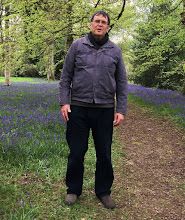
David Shankland reads:
In Flanders fields the poppies blow
Between the crosses, row on row,
That mark our place; and in the sky
The larks, still bravely singing, fly
Scarce heard amid the guns below.
We are the Dead. Short days ago
We lived, felt dawn, saw sunset glow,
Loved, and were loved, and now we lie
In Flanders fields.
Take up our quarrel with the foe:
To you from failing hands we throw
The torch; be yours to hold it high.
If ye break faith with us who die
We shall not sleep, though poppies grow
In Flanders fields.
Today we also remember that out of that sadness and terrible events there must be a longing for peace and that we should ALL work to make everyone's lives peaceful.
We can also remember the other sign mentioned in the poem. That of the cross. It reminds us that Jesus loves us so much he died for us. It reminds us of the victory of Jesus over death because Jesus is alive today, and he gives his life to people today.
I have a very special cross – here it is.
It was given me thirty years ago by a miner's widow.
During the First World War, her father, a British Soldier fought in one of the trenches in the Somme surviving 4 years of World War between 1914 and 1918 to return to his native Yorkshire. He took with him a spent brass shell case from the trench of the Somme. In his spare time he took that case and moulded it into a crucifix, an image of the Cross of Jesus.
Years later his daughter gave me that crucifix when I visited her in her old age in Doncaster.
Here it is. A cross made from a shell to show God's love.
A cross made from a weapon of destruction to hold Jesus our crucified Saviour.
I keep it on my desk to remind me of Jesus as One who can turn the raw material of our lives with all its pain and sorrow into a thing of beauty, just as the brass shell became this crucifix.
Through the cross of Jesus we know God has overcome the worst things in the world that can ever come against us – sin, fear, doubt, disease, even death – all these powers are overcome.
Jesus, the Son of God, has been through the darkest valley so I know that there is nothing God and I together cannot overcome in this world or the next.
So on Remembrance Sunday we’re asking God to give help to the living and rest to the departed, peace to the earth and heavenly life to men and women.
There are few more concise and beautiful prayers than the one carved on the outside wall of Westminster Abbey which I have copied onto the back page of our service sheet.
May God grant to the living grace, to the departed rest, to the church and the world peace and concord and to us sinners eternal life.
As we move now into prayer I want us all to say that prayer together but first I invite the cubs to lead us. Let’s keep quiet for a moment.
Reader 1 Walk among us Jesus
Reader 2 and be with soldiers and peacemakers.
Reader 1 Walk among us Jesus
Reader 2 And be with the hungry in their need.
Reader 1 Walk among us Jesus
Reader 2 And be with the frightened and lonely.
Reader 1 Help us see them,
Reader 2 Hear them
Reader 1 And in their darkness make us part of your light.
Reader 2 Amen.
Let’s all join together in the Westminster Abbey prayer:
May God grant to the living grace, to the departed rest, to the church and the world peace and concord and to us sinners eternal life. Amen.
Sunday, 14 November 2010


Saturday, 6 November 2010
Baptismal eucharist 7th November 2010
Little James and his parents were in church and there was a baptism.
The boy was taken in by all of this. He observed the priest saying something whilst pouring water over the infant’s head.
With a quizzical look on his face, he turned to his father and asked with all the innocence of a five year old ‘Daddy, why is he brainwashing that baby?’
Out of the mouth of babes!
As we baptise Barnie today we will be reminded of what it is to be a Christian.
We will say we turn to Christ, repent of our sins, renounce evil and believe in God, Father, Son and Holy Spirit.
As we say it we will all be a little more brainwashed into Christianity. At no other place does the Church of England make it so clear what it is to be a Christian than in the baptism service. As John Barnabas is so young he relies on his parents and sisters for most things. They have to speak for him today and we join with them in making the statements of Christian faith.
We will be brainwashed that bit more, we will, as Paul says, let this mind be more in us that was also in Christ Jesus.
As we say what we believe our words enter our ears and descend to our hearts so that we believe it all the more.
Little James had a point.
In choosing baptism for their children Stephen and Dawn are seeking to influence them by Jesus. They know that their children will be influenced by all sorts of worldly things and have concern that in all of this they will have the spiritual focus that Jesus offers.
In today’s scripture readings we are reminded about the central doctrine of Christianity which is the resurrection.
The passage from Job is a rare glimpse of life after death in the Old Testament. I know that my redeemer liveth Job says in words made famous by Handel’s Oratorio Messiah. Then in the Gospel reading Our Lord speaks of the existence of those who are considered worthy of a place...in the resurrection of the dead being like angels...children of God being children of the resurrection.
The background is a conflict between Jewish Pharisees and Sadducees who believed respectively in a future resurrection and in no resurrection. We can remember which side was which because the Sadducees were sad you see!
Anyway Our Lord comes down clearly with the belief of the Pharisees, a belief the truth of which his own resurrection was shortly to confirm. The dead are raised he concludes God is god not of the dead but of the living; for to him all of them are alive. (Luke 20.37, 38)
The hope of Christians for life after death is based not on wishful thinking but on the very nature of God himself who is decidedly a God of the living.
One of the things we get brainwashed or disciplined into as Christians is coming to church on a Sunday. Barnie’s sisters Grace and Sadie got an award for their Sunday attendance last week. We Christians gather on a Sunday because our God’s the God of life.
Sunday’s the day life triumphed over death in the resurrection of Jesus and there’s no more meaningful thing in life than what conquers death.
Earthly life’s a prologue. The book of life proper starts beyond the grave with Christianity’s Founder who is the life, the truth and the way.
Life is what Jesus is all about. We rejoice today that he’s given it to Barnie and that he’s got something more than earthly life up his sleeve for this little man and for all of us.
God who gives us life wants to give us his life.
I came to bring them life and have it to the full Jesus says in St John 10 verse 10.
For a Christian the glass is never half empty it’s half full at the least and it gets to overflowing.
Another scripture, again from John, makes this plain. Let anyone who is thirsty come to me, and let the one who believes in me drink. Jesus says Out of the believer’s heart shall flow rivers of living water.
When we choose Jesus there’s a fruitful overflowing.
As someone said God wants spiritual fruit, not religious nuts.
Religion can get a bit nutty, yes. It’s God-given but it does get man-handled.
We seek for Barnie the spiritual fruitfulness that is already growing around him in the Hitchen family. I can’t resist applauding Grace in particular for her cheerfulness faced with a broken collar bone, grace in name, grace in deed.
For us Christians we are so in name – our service requires us to say so again – but we seek to be so more in deed.
I have a final image from a book, which perhaps came into my mind by the vision of Stephen cycling day by day to the station. It’s called Bicycling with God and depicts the Christian life as life on the two seated bicycle we call a tandem.
At the start of the story the Christian is in the front seat steering the bicycle whilst God patiently pedals behind him. At some point they decide to swap seats and then the story becomes more exciting and energising and less predictable.
As many of you may know the Hitchens are committed to diplomatic service in the Middle East which makes for an adventure which little Barnie is now joined into. There have been comings and goings from Horsted Keynes and there will be comings and goings in years to come.
May God take the front seat in their travels, Jesus be in their adventures and the Holy Spirit bring excitement and energising to them all as life moves on from this great day in their family and God’s family here at St Giles!
The boy was taken in by all of this. He observed the priest saying something whilst pouring water over the infant’s head.
With a quizzical look on his face, he turned to his father and asked with all the innocence of a five year old ‘Daddy, why is he brainwashing that baby?’
Out of the mouth of babes!
As we baptise Barnie today we will be reminded of what it is to be a Christian.
We will say we turn to Christ, repent of our sins, renounce evil and believe in God, Father, Son and Holy Spirit.
As we say it we will all be a little more brainwashed into Christianity. At no other place does the Church of England make it so clear what it is to be a Christian than in the baptism service. As John Barnabas is so young he relies on his parents and sisters for most things. They have to speak for him today and we join with them in making the statements of Christian faith.
We will be brainwashed that bit more, we will, as Paul says, let this mind be more in us that was also in Christ Jesus.
As we say what we believe our words enter our ears and descend to our hearts so that we believe it all the more.
Little James had a point.
In choosing baptism for their children Stephen and Dawn are seeking to influence them by Jesus. They know that their children will be influenced by all sorts of worldly things and have concern that in all of this they will have the spiritual focus that Jesus offers.
In today’s scripture readings we are reminded about the central doctrine of Christianity which is the resurrection.
The passage from Job is a rare glimpse of life after death in the Old Testament. I know that my redeemer liveth Job says in words made famous by Handel’s Oratorio Messiah. Then in the Gospel reading Our Lord speaks of the existence of those who are considered worthy of a place...in the resurrection of the dead being like angels...children of God being children of the resurrection.
The background is a conflict between Jewish Pharisees and Sadducees who believed respectively in a future resurrection and in no resurrection. We can remember which side was which because the Sadducees were sad you see!
Anyway Our Lord comes down clearly with the belief of the Pharisees, a belief the truth of which his own resurrection was shortly to confirm. The dead are raised he concludes God is god not of the dead but of the living; for to him all of them are alive. (Luke 20.37, 38)
The hope of Christians for life after death is based not on wishful thinking but on the very nature of God himself who is decidedly a God of the living.
One of the things we get brainwashed or disciplined into as Christians is coming to church on a Sunday. Barnie’s sisters Grace and Sadie got an award for their Sunday attendance last week. We Christians gather on a Sunday because our God’s the God of life.
Sunday’s the day life triumphed over death in the resurrection of Jesus and there’s no more meaningful thing in life than what conquers death.
Earthly life’s a prologue. The book of life proper starts beyond the grave with Christianity’s Founder who is the life, the truth and the way.
Life is what Jesus is all about. We rejoice today that he’s given it to Barnie and that he’s got something more than earthly life up his sleeve for this little man and for all of us.
God who gives us life wants to give us his life.
I came to bring them life and have it to the full Jesus says in St John 10 verse 10.
For a Christian the glass is never half empty it’s half full at the least and it gets to overflowing.
Another scripture, again from John, makes this plain. Let anyone who is thirsty come to me, and let the one who believes in me drink. Jesus says Out of the believer’s heart shall flow rivers of living water.
When we choose Jesus there’s a fruitful overflowing.
As someone said God wants spiritual fruit, not religious nuts.
Religion can get a bit nutty, yes. It’s God-given but it does get man-handled.
We seek for Barnie the spiritual fruitfulness that is already growing around him in the Hitchen family. I can’t resist applauding Grace in particular for her cheerfulness faced with a broken collar bone, grace in name, grace in deed.
For us Christians we are so in name – our service requires us to say so again – but we seek to be so more in deed.
I have a final image from a book, which perhaps came into my mind by the vision of Stephen cycling day by day to the station. It’s called Bicycling with God and depicts the Christian life as life on the two seated bicycle we call a tandem.
At the start of the story the Christian is in the front seat steering the bicycle whilst God patiently pedals behind him. At some point they decide to swap seats and then the story becomes more exciting and energising and less predictable.
As many of you may know the Hitchens are committed to diplomatic service in the Middle East which makes for an adventure which little Barnie is now joined into. There have been comings and goings from Horsted Keynes and there will be comings and goings in years to come.
May God take the front seat in their travels, Jesus be in their adventures and the Holy Spirit bring excitement and energising to them all as life moves on from this great day in their family and God’s family here at St Giles!
Sunday, 31 October 2010
All Saints Feast 31st October 2010
Sometimes I get exasperated in my pastoral encounters, especially when people seem over concerned with material things.
Don’t get me wrong, with the government squeeze many of us are feeling the pinch and we’ve a duty to be alongside the most vulnerable.
Sometimes though, I find among us an over concern for this world’s goods and their security.
I want to dare to say in those pastoral encounters what I can say quite fearlessly in the pulpit on All Saints’ Day.
Remember – the most meaningful thing in life is what conquers death.
Earthly life is a prologue. The book of life proper starts beyond the grave with Christianity’s Founder who is the life, the truth and the way.
Christians live knowing their homeland is in heaven. We come to church to develop a taste for that homeland through bread and wine that anticipates the heavenly banquet and through the word of God which promises the same.
Behold the Lamb of God who takes away the sins of the world. Happy are those who are called to his supper.
In the eucharist we come before Jesus. We’re happy to eat and drink of him now knowing we’ll be the happier to eat and drink with him in his kingdom.
Happy are those who are called to his supper. That phrase in the liturgy has a double meaning referring to both the eucharist and the celestial banquet. This Holy Communion service is, like the cinema trailer, the preview of a forthcoming attraction in the joy of all the saints.
If people in our village could see the way things really are they’d fight to get a place at this celebration! It’s our failure, my and my predecessors, your and your predecessors as worshippers failure, to believe and to communicate this that is robbing them of this privilege.
The most meaningful thing in life is what conquers death.
I go to the Chemists and see a rack of booklets on how to overcome various conditions - arthritis, indigestion, osteoporosis, stress, varicose veins and so on.
One question not addressed is how you deal with dying.
Perhaps you wouldn’t expect doctors to have much to say about how we deal with death. Maybe they see death as the ultimate defeat for health professionals.
Yet the whole of life leads up to death. It's something quite natural, in a sense. The end of man - but in which sense - 'end' as 'finish' or 'end' as 'fulfillment'?
Dying is just as much a daily medical condition as arthritis or indigestion. Yet how do people find a consultant who can advise them on how to die?
Where do people facing eternity go to for help?
Our Christian Faith is built upon the risen Christ. He is our Consultant.
Who else can advise and prepare, console and strengthen in the face of death than Jesus?
Jesus, who in dying bore the agony of death for us.
Jesus, who in rising burst open the gates of paradise!
Our Consultant writes these words for us in his manual - though you walk through the valley of the shadow of death, fear no evil. I am with you.
This church points up to a world beyond this world because it is the church of Jesus Christ
That community is one mystical Body of Christ where there is no division between the living and the dead but all are one in the death defying love of God.
Dead or alive we belong to the same family - so we pray for each other. On All Saints feast we recall our solidarity with the Christians who’ve gone before us especially those who’ve worshipped in this church over 40 generations.
These stones that have echoed their praises are holy, and dear is the ground where their feet have once trod. Yet here they confessed they were strangers and pilgrims, and still they were seeking the city of God.
We are one today also with our beloved dead - our families, friends, benefactors - those who have inspired us or enriched our lives, who now pray for us wrapped in the mantle of God’s love for all eternity.
We are one in worship with angels and archangels and all the company of heaven.
This worship no better described than by a person who attended the Divine Liturgy in the icon filled Cathedral of Kiev in the Ukraine:
‘There is always a crowd’, he said, ‘ a promiscuity of rich and poor, of well dressed and tattered, a kaleidoscope mingling of people and colours - people standing and praying, people kneeling, people prostrated... There is no organ music, but an unearthly and spontaneous outburst of praise from the choir and the clergy and the people worshipping together...
‘And from the back and from the sides - and from the pillars and from the columns, look the pale faces of antiquity, the faces of the dead who are alive looking over the shoulders of the alive who have not yet died...All praising God, enfolding in a vast choric communion the few who in the Church have met on the common impulse to acknowledge the wonder and the splendour of the mystery of God.
‘You lose the sense of Ego, the separated individual, you are aware only of being part of a great unity praising God. You cease to be man and woman and become THE CHURCH (the Bride of Christ)’
And that is what we are this morning – the church, the community of Jesus - stretching beyond these four walls into eternity - living with lives that gain meaning from the conquest of death which brings and should bring our humanity into its right mind.
Don’t get me wrong, with the government squeeze many of us are feeling the pinch and we’ve a duty to be alongside the most vulnerable.
Sometimes though, I find among us an over concern for this world’s goods and their security.
I want to dare to say in those pastoral encounters what I can say quite fearlessly in the pulpit on All Saints’ Day.
Remember – the most meaningful thing in life is what conquers death.
Earthly life is a prologue. The book of life proper starts beyond the grave with Christianity’s Founder who is the life, the truth and the way.
Christians live knowing their homeland is in heaven. We come to church to develop a taste for that homeland through bread and wine that anticipates the heavenly banquet and through the word of God which promises the same.
Behold the Lamb of God who takes away the sins of the world. Happy are those who are called to his supper.
In the eucharist we come before Jesus. We’re happy to eat and drink of him now knowing we’ll be the happier to eat and drink with him in his kingdom.
Happy are those who are called to his supper. That phrase in the liturgy has a double meaning referring to both the eucharist and the celestial banquet. This Holy Communion service is, like the cinema trailer, the preview of a forthcoming attraction in the joy of all the saints.
If people in our village could see the way things really are they’d fight to get a place at this celebration! It’s our failure, my and my predecessors, your and your predecessors as worshippers failure, to believe and to communicate this that is robbing them of this privilege.
The most meaningful thing in life is what conquers death.
I go to the Chemists and see a rack of booklets on how to overcome various conditions - arthritis, indigestion, osteoporosis, stress, varicose veins and so on.
One question not addressed is how you deal with dying.
Perhaps you wouldn’t expect doctors to have much to say about how we deal with death. Maybe they see death as the ultimate defeat for health professionals.
Yet the whole of life leads up to death. It's something quite natural, in a sense. The end of man - but in which sense - 'end' as 'finish' or 'end' as 'fulfillment'?
Dying is just as much a daily medical condition as arthritis or indigestion. Yet how do people find a consultant who can advise them on how to die?
Where do people facing eternity go to for help?
Our Christian Faith is built upon the risen Christ. He is our Consultant.
Who else can advise and prepare, console and strengthen in the face of death than Jesus?
Jesus, who in dying bore the agony of death for us.
Jesus, who in rising burst open the gates of paradise!
Our Consultant writes these words for us in his manual - though you walk through the valley of the shadow of death, fear no evil. I am with you.
This church points up to a world beyond this world because it is the church of Jesus Christ
That community is one mystical Body of Christ where there is no division between the living and the dead but all are one in the death defying love of God.
Dead or alive we belong to the same family - so we pray for each other. On All Saints feast we recall our solidarity with the Christians who’ve gone before us especially those who’ve worshipped in this church over 40 generations.
These stones that have echoed their praises are holy, and dear is the ground where their feet have once trod. Yet here they confessed they were strangers and pilgrims, and still they were seeking the city of God.
We are one today also with our beloved dead - our families, friends, benefactors - those who have inspired us or enriched our lives, who now pray for us wrapped in the mantle of God’s love for all eternity.
We are one in worship with angels and archangels and all the company of heaven.
This worship no better described than by a person who attended the Divine Liturgy in the icon filled Cathedral of Kiev in the Ukraine:
‘There is always a crowd’, he said, ‘ a promiscuity of rich and poor, of well dressed and tattered, a kaleidoscope mingling of people and colours - people standing and praying, people kneeling, people prostrated... There is no organ music, but an unearthly and spontaneous outburst of praise from the choir and the clergy and the people worshipping together...
‘And from the back and from the sides - and from the pillars and from the columns, look the pale faces of antiquity, the faces of the dead who are alive looking over the shoulders of the alive who have not yet died...All praising God, enfolding in a vast choric communion the few who in the Church have met on the common impulse to acknowledge the wonder and the splendour of the mystery of God.
‘You lose the sense of Ego, the separated individual, you are aware only of being part of a great unity praising God. You cease to be man and woman and become THE CHURCH (the Bride of Christ)’
And that is what we are this morning – the church, the community of Jesus - stretching beyond these four walls into eternity - living with lives that gain meaning from the conquest of death which brings and should bring our humanity into its right mind.
Saturday, 23 October 2010
May Christ dwell in our hearts prayer exploration 24th October 2010
I want to share a few hints about private prayer expanding to start with on p2-4 of the May Christ Dwell booklet and using part of an interview I did some time back with the Archbishop of Canterbury for Premier Christian Radio.
One of the most important things about our daily prayer is in fact the time we give. Whatever we feel or don't feel at prayer it is the offering of 5, 10, 15 minutes daily that is pivotal.
Archbishop Ramsey's quote – when asked how long he prayed for each day he said about two min but it sometimes took him half an hour to get there.
Time matters. It is also important to offer Our Lord what we might call ‘prime time’.
We will make way for him better when we are most fully ourselves.
Some say the morning is the best, avoiding that burned out feeling at night, and I am one of those who prays in the morning, with more of a nod to God at night.
Time, and then secondly, place. At St Giles we are all privileged to have a church that is open all day and each of us could make more use of this fact. Or we could decide afresh at this time on a prayer space at home.
We need then to be quiet, but perhaps not too quiet so we keep our feet on the ground. In a household there needs to be agreement.
We need perhaps to be comfortable, not so much that we fall asleep.
Prayer invites attentiveness. Some people say a hard backed chair gives you that business like feeling. Myself I use a comfy chair, but try to stand or kneel as well for some of the time.
Then what - now we move onto the real business of prayer and for that we enter on a number of options as starting points. Prayer is a lifting of heart and mind to God and there are many different ‘airports’ for lift off.
Speaking for myself day by day I look to a variety of airports.
Shall I choose a bible passage? Am I so tired it would be better to sit looking at the Cross? Is there a piece of paper with some prayer biddings that I could start from? Or something that struck me in that sermon I heard the other Sunday? Or that spiritual book I’m reading? Shall I get my rosary out? Or say the Jesus Prayer from today’s Gospel – Lord Jesus Christ, Son of God, have mercy on me a sinner - to empty my mind of distraction? Today I will say Morning Prayer and stop to contemplate wherever the Spirit underlines something. Or - it’s about time I did a thorough self-examination so I’ll get out a sin list or read the fruit of the Spirit in Galatians and see where love, joy, peace and all the rest are growing in my life. There was something terrible on the news this morning so I’ll look up Job 38-40 and think how God is so wonderful and beyond us. I was asked to pray for that lady whose son’s on drugs so I’ll start with them before I forget and see where my intercession leads. Or – what a lovely view through the window this morning – the sun on the leaves. Let’s start there.
I say Let’s – prayer is something we do with God. It’s also a human discipline. This is why it helps to have a decided base for prayer, the airport I’ve called it, as you start your prayer and hope for take off!
It matters to hold yourself to it eg. if you are praying from a bible passage hold the bible for all 20 minutes to keep the focus.
Confession of sin before you pray is also important since the bottom line for prayer is honesty.
That’s enough on how I pray! Now let’s hear how Archbishop Rowan prays! This is part of an interview he gave me in 2004 at Lambeth Palace.
To welcome more of the radiance of Jesus into our hearts involves us in a life-long struggle because of our fallen nature.
Christianity is the gift of Jesus but it involves us in the task of prayerful devotion. Through that devotion, renewed among us this month, may others catch on to what Jesus is doing and be drawn to him through us.
When the church becomes a house of prayer it’s said the whole world will come running!
One of the most important things about our daily prayer is in fact the time we give. Whatever we feel or don't feel at prayer it is the offering of 5, 10, 15 minutes daily that is pivotal.
Archbishop Ramsey's quote – when asked how long he prayed for each day he said about two min but it sometimes took him half an hour to get there.
Time matters. It is also important to offer Our Lord what we might call ‘prime time’.
We will make way for him better when we are most fully ourselves.
Some say the morning is the best, avoiding that burned out feeling at night, and I am one of those who prays in the morning, with more of a nod to God at night.
Time, and then secondly, place. At St Giles we are all privileged to have a church that is open all day and each of us could make more use of this fact. Or we could decide afresh at this time on a prayer space at home.
We need then to be quiet, but perhaps not too quiet so we keep our feet on the ground. In a household there needs to be agreement.
We need perhaps to be comfortable, not so much that we fall asleep.
Prayer invites attentiveness. Some people say a hard backed chair gives you that business like feeling. Myself I use a comfy chair, but try to stand or kneel as well for some of the time.
Then what - now we move onto the real business of prayer and for that we enter on a number of options as starting points. Prayer is a lifting of heart and mind to God and there are many different ‘airports’ for lift off.
Speaking for myself day by day I look to a variety of airports.
Shall I choose a bible passage? Am I so tired it would be better to sit looking at the Cross? Is there a piece of paper with some prayer biddings that I could start from? Or something that struck me in that sermon I heard the other Sunday? Or that spiritual book I’m reading? Shall I get my rosary out? Or say the Jesus Prayer from today’s Gospel – Lord Jesus Christ, Son of God, have mercy on me a sinner - to empty my mind of distraction? Today I will say Morning Prayer and stop to contemplate wherever the Spirit underlines something. Or - it’s about time I did a thorough self-examination so I’ll get out a sin list or read the fruit of the Spirit in Galatians and see where love, joy, peace and all the rest are growing in my life. There was something terrible on the news this morning so I’ll look up Job 38-40 and think how God is so wonderful and beyond us. I was asked to pray for that lady whose son’s on drugs so I’ll start with them before I forget and see where my intercession leads. Or – what a lovely view through the window this morning – the sun on the leaves. Let’s start there.
I say Let’s – prayer is something we do with God. It’s also a human discipline. This is why it helps to have a decided base for prayer, the airport I’ve called it, as you start your prayer and hope for take off!
It matters to hold yourself to it eg. if you are praying from a bible passage hold the bible for all 20 minutes to keep the focus.
Confession of sin before you pray is also important since the bottom line for prayer is honesty.
That’s enough on how I pray! Now let’s hear how Archbishop Rowan prays! This is part of an interview he gave me in 2004 at Lambeth Palace.
To welcome more of the radiance of Jesus into our hearts involves us in a life-long struggle because of our fallen nature.
Christianity is the gift of Jesus but it involves us in the task of prayerful devotion. Through that devotion, renewed among us this month, may others catch on to what Jesus is doing and be drawn to him through us.
When the church becomes a house of prayer it’s said the whole world will come running!
Sunday, 10 October 2010
Harvest Festival 10.10.10
I remember on my holidays attending a weekday eucharist in a parish church up in North Yorkshire.
The old priest was struggling to celebrate.
The twenty five minutes of the celebration were full of devotion.
They were also a battle against infirmity as Fr Tony fought his infirmity to take, bless, break and share with the dozen of us gathered in church for the daily offering.
I had a cup of coffee with him after and he gave me this poem that challenges people who whine about life that I have always valued:
Today upon a bus I saw a lovely girl with golden hair.
When suddenly she rose to leave I saw her hobble down the aisle.
She had one foot and wore a crutch but as she passed she smiled.
O God forgive me when I whine, I have two feet … the world is mine.
It meant a lot to me, and it will mean even more as physical infirmities grow with old age.
There will come a day when the gestures of the eucharist will be painful to my own body as it grows feeble.
The elderly priest and his poem reminded me once more of all I take for granted especially health and strength.
I recalled the very name of the service: Eucharist which means thanksgiving.
When Jesus took bread and wine he gave God thanks and so should we.
Thank you Fr Tony for reminding me of this.
Today our thanksgiving is writ large on harvest festival.
Archbishop Michael Ramsey once said that thanksgiving is a soil in which the weed of pride will not easily grow.
‘All things come of you’ we pray ‘and of your own do we give you’
For the beauty of the earth, for the joy of human love, for health and strength and for grace to overcome our infirmities we thank you, Lord!
We join our thanksgivings to those offered today on a million altars across the world in this great sacrifice of thanks and praise, the holy eucharist. Amen.
The old priest was struggling to celebrate.
The twenty five minutes of the celebration were full of devotion.
They were also a battle against infirmity as Fr Tony fought his infirmity to take, bless, break and share with the dozen of us gathered in church for the daily offering.
I had a cup of coffee with him after and he gave me this poem that challenges people who whine about life that I have always valued:
Today upon a bus I saw a lovely girl with golden hair.
When suddenly she rose to leave I saw her hobble down the aisle.
She had one foot and wore a crutch but as she passed she smiled.
O God forgive me when I whine, I have two feet … the world is mine.
It meant a lot to me, and it will mean even more as physical infirmities grow with old age.
There will come a day when the gestures of the eucharist will be painful to my own body as it grows feeble.
The elderly priest and his poem reminded me once more of all I take for granted especially health and strength.
I recalled the very name of the service: Eucharist which means thanksgiving.
When Jesus took bread and wine he gave God thanks and so should we.
Thank you Fr Tony for reminding me of this.
Today our thanksgiving is writ large on harvest festival.
Archbishop Michael Ramsey once said that thanksgiving is a soil in which the weed of pride will not easily grow.
‘All things come of you’ we pray ‘and of your own do we give you’
For the beauty of the earth, for the joy of human love, for health and strength and for grace to overcome our infirmities we thank you, Lord!
We join our thanksgivings to those offered today on a million altars across the world in this great sacrifice of thanks and praise, the holy eucharist. Amen.
Sunday, 3 October 2010
Dedication Festival 3rd October 2010
As parish priest I carry a lot of keys.
The Church keys are big – they make holes in my pocket!
I’ve got other keys for my house and my car and the smallest is this - my key fob to London’s Boris bikes.
Yes, Tuesday, my day off, saw me taking a series of 30 minute cycle rides across London thanks to my new membership of Barclays Cycle Hire.
Put this key into the docking station and it releases you a bike near Victoria station so you can cycle, as I did on Tuesday, to the Imperial War Museum in Lambeth.
I docked and then, after my visit, like changing horses in the middle ages, I used my key to release for me another bike that took me to my next port of call in Bloomsbury.
With Boris bikes you can ride all day for £1 if you make multiple journeys of under 30 minutes each.
This is a precious key, opening up London to me.
This is a no less precious key, opening up Church.
It is our Feast of Dedication. We recall the day this building was set apart, after its construction, for the worship of God.
Church keys take us into church buildings but what you do there is the real thing.
We worship. We lift heart and mind to God standing on the shoulders of thousands who’ve been here before us in this holy place seeking God’s face.
There was worship in heaven before Saint Giles was built and there will be worship in heaven after this building lies in the dust.
The question is will you and I in a century’s time be part of that worship?
We will need a key to do so.
That will be our faith in Jesus who opens wide the gate of heaven to those below.
By faith, the conviction of things unseen, we unlock possibilities for this world and the next.
Just as this key fob gives you access to free journeying in London so the gift of faith gives you access to a sense of belonging, purpose and empowerment that makes life really worth living.
On this Feast of Dedication we have a challenge to deepen our spiritual life.
In ten days time St. Giles is launching a prayer exploration fortnight. Next Sunday at Harvest Festival every church attender will be offered a free resource booklet to aid their personal prayer.
The booklet will provide exercises linked to the three interactive teaching sessions on Thursday evenings spaced a week apart starting on October 14th. These prayer exercises will be commended and talked through during the sermon on Sunday 17th and 24th October.
The three Thursday evening sessions will centre on praying from scripture, silent contemplation and charismatic prayer. There will be reference to Ignatian meditation, use of the Jesus Prayer and experience of the Holy Spirit among other aspects of prayer. The overall theme will touch on inviting the indwelling of Christ and building the desire to be his instrument in the work of spreading the good news Jesus brings to us.
When the church becomes a house of prayer the people will come running. wrote Brother Roger of Taizé
The church’s mission is weak because her prayer is weak. This month could be the key to a new work of the Holy Spirit here at St Giles. Last Sunday we had the excitement of several new faces on Back to Church Sunday a well as a gift of £5,000 to bring the welcoming doors project back to life.
Refreshing our prayer has enormous implications if we really set our hearts to it – and this month is a privileged place if you will make it so.
Prayer is the key of faith. By it we unlock the eternity we were made for and the eternal love that welcomes open hearts to make them one with the just made perfect .
Prayer is the key that unlocks the way into what God has in store for each one of us.
Through the prayer of faith we are able to make better life choices from the countless possibilities that lie before us all.
When I was 21 I remember getting cards with keys upon them. ‘Key of the door – 21’.
Life has moved on so that the things I gained access to at 21, to vote, to open a bank account and so on, come earlier than they did years ago.
My key fob works through an electronic internet new to the world this century. Through it there can be an oversight of 6,000 cycles at 400 docking stations across London.
My church key opens up access to a building where through preaching and sacrament we encounter one whose oversight extends across this world and the next.
Your faith and mine, the Christian faith, owns that oversight and welcomes through it a purpose for living and a reason for dying.
This is what lies behind what we are about this morning on our Feast of Dedication which is today a call to the prayer of faith which is the key to life.
I close with some words addressed to Our Lord in a hymn of Charles Wesley:
Visit then this soul of mine, pierce the gloom of sin and grief, fill me radiancy divine, scatter all my unbelief. More and more thyself display. Shining to the perfect day!
The Church keys are big – they make holes in my pocket!
I’ve got other keys for my house and my car and the smallest is this - my key fob to London’s Boris bikes.
Yes, Tuesday, my day off, saw me taking a series of 30 minute cycle rides across London thanks to my new membership of Barclays Cycle Hire.
Put this key into the docking station and it releases you a bike near Victoria station so you can cycle, as I did on Tuesday, to the Imperial War Museum in Lambeth.
I docked and then, after my visit, like changing horses in the middle ages, I used my key to release for me another bike that took me to my next port of call in Bloomsbury.
With Boris bikes you can ride all day for £1 if you make multiple journeys of under 30 minutes each.
This is a precious key, opening up London to me.
This is a no less precious key, opening up Church.
It is our Feast of Dedication. We recall the day this building was set apart, after its construction, for the worship of God.
Church keys take us into church buildings but what you do there is the real thing.
We worship. We lift heart and mind to God standing on the shoulders of thousands who’ve been here before us in this holy place seeking God’s face.
There was worship in heaven before Saint Giles was built and there will be worship in heaven after this building lies in the dust.
The question is will you and I in a century’s time be part of that worship?
We will need a key to do so.
That will be our faith in Jesus who opens wide the gate of heaven to those below.
By faith, the conviction of things unseen, we unlock possibilities for this world and the next.
Just as this key fob gives you access to free journeying in London so the gift of faith gives you access to a sense of belonging, purpose and empowerment that makes life really worth living.
On this Feast of Dedication we have a challenge to deepen our spiritual life.
In ten days time St. Giles is launching a prayer exploration fortnight. Next Sunday at Harvest Festival every church attender will be offered a free resource booklet to aid their personal prayer.
The booklet will provide exercises linked to the three interactive teaching sessions on Thursday evenings spaced a week apart starting on October 14th. These prayer exercises will be commended and talked through during the sermon on Sunday 17th and 24th October.
The three Thursday evening sessions will centre on praying from scripture, silent contemplation and charismatic prayer. There will be reference to Ignatian meditation, use of the Jesus Prayer and experience of the Holy Spirit among other aspects of prayer. The overall theme will touch on inviting the indwelling of Christ and building the desire to be his instrument in the work of spreading the good news Jesus brings to us.
When the church becomes a house of prayer the people will come running. wrote Brother Roger of Taizé
The church’s mission is weak because her prayer is weak. This month could be the key to a new work of the Holy Spirit here at St Giles. Last Sunday we had the excitement of several new faces on Back to Church Sunday a well as a gift of £5,000 to bring the welcoming doors project back to life.
Refreshing our prayer has enormous implications if we really set our hearts to it – and this month is a privileged place if you will make it so.
Prayer is the key of faith. By it we unlock the eternity we were made for and the eternal love that welcomes open hearts to make them one with the just made perfect .
Prayer is the key that unlocks the way into what God has in store for each one of us.
Through the prayer of faith we are able to make better life choices from the countless possibilities that lie before us all.
When I was 21 I remember getting cards with keys upon them. ‘Key of the door – 21’.
Life has moved on so that the things I gained access to at 21, to vote, to open a bank account and so on, come earlier than they did years ago.
My key fob works through an electronic internet new to the world this century. Through it there can be an oversight of 6,000 cycles at 400 docking stations across London.
My church key opens up access to a building where through preaching and sacrament we encounter one whose oversight extends across this world and the next.
Your faith and mine, the Christian faith, owns that oversight and welcomes through it a purpose for living and a reason for dying.
This is what lies behind what we are about this morning on our Feast of Dedication which is today a call to the prayer of faith which is the key to life.
I close with some words addressed to Our Lord in a hymn of Charles Wesley:
Visit then this soul of mine, pierce the gloom of sin and grief, fill me radiancy divine, scatter all my unbelief. More and more thyself display. Shining to the perfect day!
Sunday, 26 September 2010
Trinity 17 26th September 10am
Alas for those who lie on beds of ivory says Amos in the first of three hard-hitting scripture readings this morning.
I wonder what went through Harold Macmillan’s mind as he heard those words and the parable of Dives and Lazarus sitting here in St Giles 25 years ago?
I say so because I have just enjoyed reading Supermac his latest and most authoritative biography by Richard Thorpe who I am hoping we can get to our historical society. It’s a great read - in more sense than one!
Macmillan, Prime Minister 1957-1963, died in 1986, was one of those good all-rounders getting all the rarer in our specialised world. He ticked boxes in the worlds of the university, commerce, the military and religion. His politics were liberal yet conservative, rebel yet loyalist. He was a crofter’s great-grandson yet his father-in-law was a Duke. Possessing all these qualities guarantees personal complexity and an interesting biography.
Great men and women are usually people who have suffered. In this way their humanity appeals through the braving of fear. Macmillan’s courage was forged in the trenches of the First World War and a near death experience in the Second World War. His family life was traumatic but he braved humiliation sticking it seems to Christian principle and refusing to contemplate divorce. The courage he possessed made him his own man. He stood alone in cabinet when he told the aged Churchill his days as Prime Minister needed to end. Macmillan even dared to suggest to Pope Pius XII he would serve Christian unity by recognising the orders of Anglican priests – to be received by silence!
Harold Macmillan was a great wit. Interrupted in a speech by Khruschev banging his shoe on the table at the United Nations he looks up and says quietly, ‘Well, I would like it translating if you would.’ Unveiling a bronze of Mrs Thatcher at the Carlton Club he makes an audible stage whisper, ‘Now I must remember that I am unveiling a bust of Margaret Thatcher, not Margaret Thatcher’s bust.’ On a trip to Russia, told ‘dobry den’ means ‘good day’ he regales everyone with the words ‘double gin’!
His brilliant intellect made him too clever for some, including Churchill who saw him as an opinionated subordinate. Macmillan saw his undergraduate reading parties as the very anticipation of heaven. Throughout his life his work was energised by his reading times. His experience at the sharp end of things did something to redeem his cerebral tendency but a negative image persisted. His Labour political opponent Aneurin Bevan saw him as a poseur. Bevan concluded cruelly that having watched the man carefully for years ‘behind that Edwardian countenance there is nothing’.
His fellow Tory rival Butler was kinder and saw two sides to him ‘the soft heart for and the strong determination to help the underdog, and the social habit to associate happily with the overdog’.
It was this phrase that came to mind as I finished reading Macmillan and started reading the scripture set for the 17th Sunday after Trinity in the third of our three year cycle.
Amos thundered against those who like ivory couches. Like Macmillan many of us have a tendency to associate happily with the overdog, like the Rector of Horsted Keynes – I am the Rector of Horsted Keynes. Like my predecessors I have access to people at the top of the academic, political, commercial and military worlds as this goes with the job alongside its more humble pursuits . I know Fr Mark Hill-Tout read to Macmillan in his final illness. A previous Rector allowed Macmillan to change the lectionary reading the Sunday Churchill died to ‘let us now praise famous men’. Dorothy Baxter, now 96, will tell you how Macmillan used to keep the choir in order.
This is not a ‘books I have recently read’ sermon – I am getting to the point, believe me!
Macmillan once said ‘It is thinking about themselves that is really the curse of the younger generation...a curious introspective attitude towards life, the result no doubt of two wars and a dying faith’.
The danger of self-absorption lies behind what prophet Amos, Saint Paul and Our Lord and Saviour are speaking of in this morning’s readings.
Those who want to be rich fall into temptation and are trapped by many senseless and harmful desires that plunge people into ruin and destruction says Paul. For the love of money is a root of all kinds of evil, and in their eagerness to be rich some have wandered away from the faith and pierced themselves with many pains. Those pains are described in the chilling parable I read chosen for today’s Gospel. Chilling is hardly the word for it describes the fires tormenting Dives – the rich man – on account of his neglect of poor Lazarus. Remember that during your lifetime you received your good things, and Lazarus in like manner evil things; but now he is comforted here, and you are in agony. Besides all this, between you and us a great chasm has been fixed, so that those who might want to pass from here to you cannot do so, and no one can cross from there to us.
It is always chilling to encounter people whose self-absorption with pleasing themselves has made them totally indifferent to the needs of those around them. I think for a start of the people who walk across Victoria station texting away and bumping into everyone else – but I wouldn’t quite wish them hell fire!
Let me go back to Macmillan. He possessed a clear sense of divine providence working through the historical events that propelled his career and the illness that saved his addressing the prime ministerial succession. To his Christian sensibilities we owe the appointment of two of the Church of England’s most famous 20th century clerics, Michael Ramsey to Canterbury and Mervyn Stockwood to Southwark.
What is evident in Richard Thorpe’s biography, which brings out the Christian side, is Macmillan’s own sadness in his later years at the self-preoccupation that seemed to have grown up in the wake of the decline in Christian allegiance. He ends the book quoting his call to ‘restore and strengthen the moral and spiritual as well as the material’ rather countering the materialist ‘you’ve never had it so good’ association people make with Harold Macmillan.
Today’s scripture is a wake-up call. Rather as David Cameron said to the Pope last Sunday Christian faith is something to make us ‘sit up and think’. If we really believe in God this should take us out of ourselves and waken us up to the realities around us, both God and neighbour, whose service brings perfect freedom in this world and the next.
Among these realities are the eight Millennium Development Goals which take us into the global politics Harold Macmillan served for so many years. These eight goals all 192 United Nations member states and at least 23 international organizations have agreed to achieve by the year 2015. They are:
• To eradicate extreme poverty and hunger
• To achieve universal primary education
• To promote gender equality and empower women
• To reduce the child mortality rate
• To improve maternal health
• To combat HIV/AIDS, malaria, and other diseases
• To ensure environmental sustainability
• To develop a global partnership for development
If today’s gospel says anything it is a warning about the failure of partnership and its consequences.
The rich man was guilty not of being rich but of being a bad steward of his possessions. By God’s generosity he possessed, as we possess, an awful lot, and yet he would not imitate that generosity by sharing with those in need, with Lazarus ‘who longed to satisfy his hunger with what fell from the rich man’s table’.
Today’s scripture is hard hitting. The needs of the world are very urgent. UN Secretary-General Ban Ki-Moon has said ‘World military spending has now risen to over $1.2 trillion dollars. This incredible sum represents 2.5% of Gross Domestic Product. Even if 1% of it were redirected towards development, the world would be much closer to achieving the Millennium Development Goals’.
God raise up new Macmillan’s to work in politics for these ends, and raise up generosity in his people here, not least in our support for St Anne’s Hospital, Tanzania in today’s charitable giving.
God free us from ourselves through the eucharist, the thanksgiving for his love we offer day by day, to be more centred on his heart which encompasses poor and rich, near and far. So be it.
I wonder what went through Harold Macmillan’s mind as he heard those words and the parable of Dives and Lazarus sitting here in St Giles 25 years ago?
I say so because I have just enjoyed reading Supermac his latest and most authoritative biography by Richard Thorpe who I am hoping we can get to our historical society. It’s a great read - in more sense than one!
Macmillan, Prime Minister 1957-1963, died in 1986, was one of those good all-rounders getting all the rarer in our specialised world. He ticked boxes in the worlds of the university, commerce, the military and religion. His politics were liberal yet conservative, rebel yet loyalist. He was a crofter’s great-grandson yet his father-in-law was a Duke. Possessing all these qualities guarantees personal complexity and an interesting biography.
Great men and women are usually people who have suffered. In this way their humanity appeals through the braving of fear. Macmillan’s courage was forged in the trenches of the First World War and a near death experience in the Second World War. His family life was traumatic but he braved humiliation sticking it seems to Christian principle and refusing to contemplate divorce. The courage he possessed made him his own man. He stood alone in cabinet when he told the aged Churchill his days as Prime Minister needed to end. Macmillan even dared to suggest to Pope Pius XII he would serve Christian unity by recognising the orders of Anglican priests – to be received by silence!
Harold Macmillan was a great wit. Interrupted in a speech by Khruschev banging his shoe on the table at the United Nations he looks up and says quietly, ‘Well, I would like it translating if you would.’ Unveiling a bronze of Mrs Thatcher at the Carlton Club he makes an audible stage whisper, ‘Now I must remember that I am unveiling a bust of Margaret Thatcher, not Margaret Thatcher’s bust.’ On a trip to Russia, told ‘dobry den’ means ‘good day’ he regales everyone with the words ‘double gin’!
His brilliant intellect made him too clever for some, including Churchill who saw him as an opinionated subordinate. Macmillan saw his undergraduate reading parties as the very anticipation of heaven. Throughout his life his work was energised by his reading times. His experience at the sharp end of things did something to redeem his cerebral tendency but a negative image persisted. His Labour political opponent Aneurin Bevan saw him as a poseur. Bevan concluded cruelly that having watched the man carefully for years ‘behind that Edwardian countenance there is nothing’.
His fellow Tory rival Butler was kinder and saw two sides to him ‘the soft heart for and the strong determination to help the underdog, and the social habit to associate happily with the overdog’.
It was this phrase that came to mind as I finished reading Macmillan and started reading the scripture set for the 17th Sunday after Trinity in the third of our three year cycle.
Amos thundered against those who like ivory couches. Like Macmillan many of us have a tendency to associate happily with the overdog, like the Rector of Horsted Keynes – I am the Rector of Horsted Keynes. Like my predecessors I have access to people at the top of the academic, political, commercial and military worlds as this goes with the job alongside its more humble pursuits . I know Fr Mark Hill-Tout read to Macmillan in his final illness. A previous Rector allowed Macmillan to change the lectionary reading the Sunday Churchill died to ‘let us now praise famous men’. Dorothy Baxter, now 96, will tell you how Macmillan used to keep the choir in order.
This is not a ‘books I have recently read’ sermon – I am getting to the point, believe me!
Macmillan once said ‘It is thinking about themselves that is really the curse of the younger generation...a curious introspective attitude towards life, the result no doubt of two wars and a dying faith’.
The danger of self-absorption lies behind what prophet Amos, Saint Paul and Our Lord and Saviour are speaking of in this morning’s readings.
Those who want to be rich fall into temptation and are trapped by many senseless and harmful desires that plunge people into ruin and destruction says Paul. For the love of money is a root of all kinds of evil, and in their eagerness to be rich some have wandered away from the faith and pierced themselves with many pains. Those pains are described in the chilling parable I read chosen for today’s Gospel. Chilling is hardly the word for it describes the fires tormenting Dives – the rich man – on account of his neglect of poor Lazarus. Remember that during your lifetime you received your good things, and Lazarus in like manner evil things; but now he is comforted here, and you are in agony. Besides all this, between you and us a great chasm has been fixed, so that those who might want to pass from here to you cannot do so, and no one can cross from there to us.
It is always chilling to encounter people whose self-absorption with pleasing themselves has made them totally indifferent to the needs of those around them. I think for a start of the people who walk across Victoria station texting away and bumping into everyone else – but I wouldn’t quite wish them hell fire!
Let me go back to Macmillan. He possessed a clear sense of divine providence working through the historical events that propelled his career and the illness that saved his addressing the prime ministerial succession. To his Christian sensibilities we owe the appointment of two of the Church of England’s most famous 20th century clerics, Michael Ramsey to Canterbury and Mervyn Stockwood to Southwark.
What is evident in Richard Thorpe’s biography, which brings out the Christian side, is Macmillan’s own sadness in his later years at the self-preoccupation that seemed to have grown up in the wake of the decline in Christian allegiance. He ends the book quoting his call to ‘restore and strengthen the moral and spiritual as well as the material’ rather countering the materialist ‘you’ve never had it so good’ association people make with Harold Macmillan.
Today’s scripture is a wake-up call. Rather as David Cameron said to the Pope last Sunday Christian faith is something to make us ‘sit up and think’. If we really believe in God this should take us out of ourselves and waken us up to the realities around us, both God and neighbour, whose service brings perfect freedom in this world and the next.
Among these realities are the eight Millennium Development Goals which take us into the global politics Harold Macmillan served for so many years. These eight goals all 192 United Nations member states and at least 23 international organizations have agreed to achieve by the year 2015. They are:
• To eradicate extreme poverty and hunger
• To achieve universal primary education
• To promote gender equality and empower women
• To reduce the child mortality rate
• To improve maternal health
• To combat HIV/AIDS, malaria, and other diseases
• To ensure environmental sustainability
• To develop a global partnership for development
If today’s gospel says anything it is a warning about the failure of partnership and its consequences.
The rich man was guilty not of being rich but of being a bad steward of his possessions. By God’s generosity he possessed, as we possess, an awful lot, and yet he would not imitate that generosity by sharing with those in need, with Lazarus ‘who longed to satisfy his hunger with what fell from the rich man’s table’.
Today’s scripture is hard hitting. The needs of the world are very urgent. UN Secretary-General Ban Ki-Moon has said ‘World military spending has now risen to over $1.2 trillion dollars. This incredible sum represents 2.5% of Gross Domestic Product. Even if 1% of it were redirected towards development, the world would be much closer to achieving the Millennium Development Goals’.
God raise up new Macmillan’s to work in politics for these ends, and raise up generosity in his people here, not least in our support for St Anne’s Hospital, Tanzania in today’s charitable giving.
God free us from ourselves through the eucharist, the thanksgiving for his love we offer day by day, to be more centred on his heart which encompasses poor and rich, near and far. So be it.
Subscribe to:
Posts (Atom)