Saturday, 3 September 2022

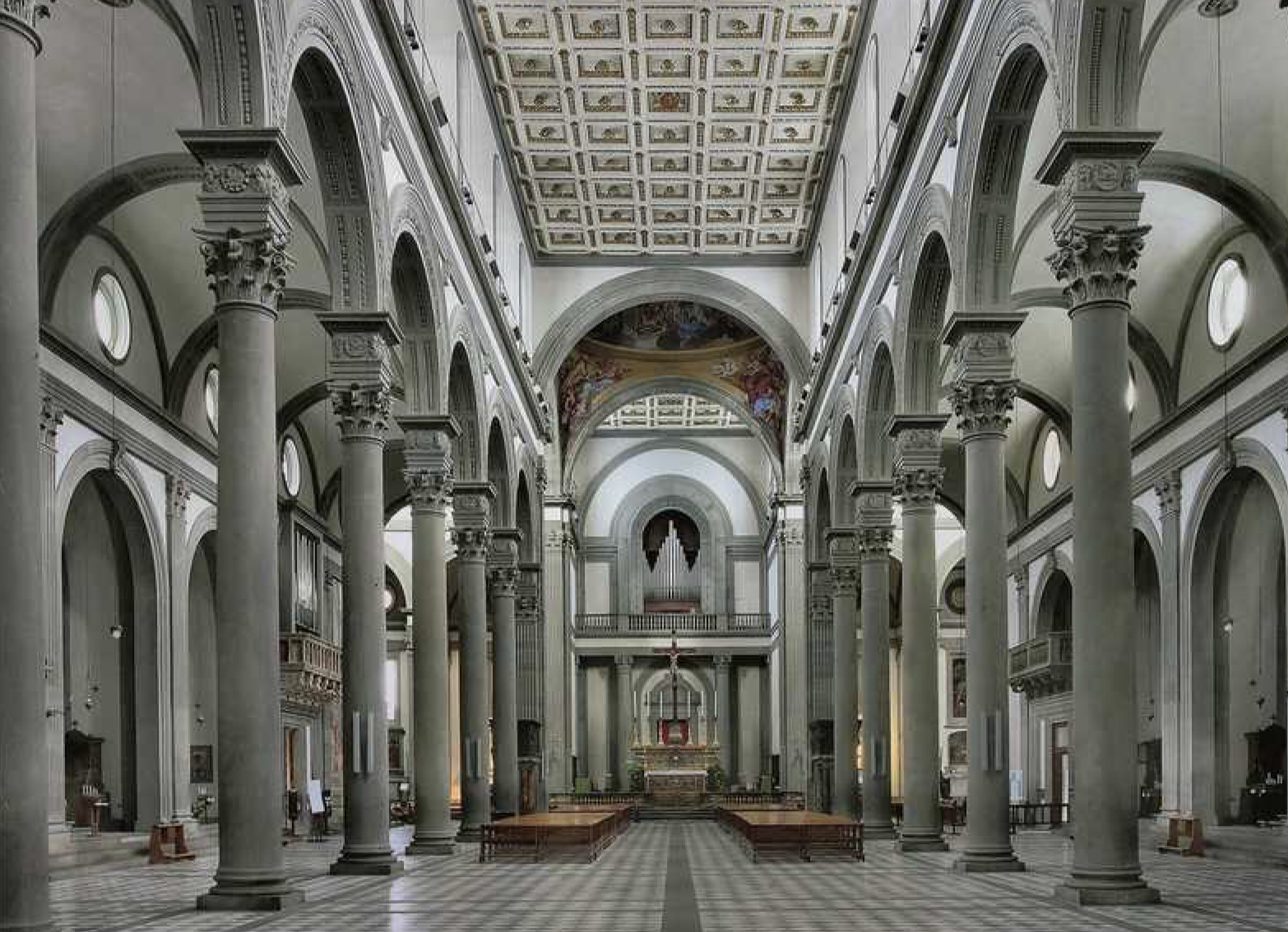
Orjan Borgen & Courtney Jiskoot marriage blessing St Mary, Balcombe 3.9.22


This is a remarkable coming together set within a weekend of celebration for Courtney and Orjan. We come to rural Sussex from rural Norway and many other places, some less beautiful than this, to see Orjan and Courtney ‘present their bodies as a living sacrifice, holy and acceptable to God’, to Him and to one another.


It is my privilege to celebrate their love before God and bless their aspirations in the presence of their families and friends joined by their marriage.


They met as they worked together at Schlumberger oil field near Orjan’s home in the little Norwegian town of Os near Bergen. In working together to harvest gifts from below the earth they paved the way for reaping a harvest from heaven, where Christians believe marriage is prepared. Today they welcome the anointing of the Holy Spirit from heaven. Previously as Christians they have each welcomed the anointing of the same Holy Spirit in baptism, confirmation and Holy Communion. Today they seek that anointing to bless their forward journey in life together.


Courtney grew up near here in Tunbridge Wells where she was involved in St John’s. Church, spent time volunteering and was part of the youth group. After studying Geology at the University of Bristol she spent a year studying abroad in California which broadened her vision and led her on to work in oil in Malaysia and then Norway, where she met Orjan who worked at the same company. To quote Courtney on Orjan: ‘Kind and charitable…when we did start dating, I don’t think it took me very long to realise this was the man I wanted to marry. There’s never been anything left unsaid between us to fester, we address issues quickly, partially out of fear that this might take away from our sense of intimacy... Marriage isn’t something either of us wanted to enter into lightly, but see it as the next challenge and commitment to each other’.


Orjan describes himself as being a sports and nutrition fanatic throughout his youth. He joined the military for a year (Norwegian National Service). After that, 13 years ago, he started working for Schlumberger and met Courtney around 6 years ago. I quote Orjan: ‘I’m looking forward to marriage, it’s the love of my life who I want to be with forever. I want our marriage to be our commitment to each other throughout the darkness and light, using communication and honesty’.


Both Courtney and Orjan are inspired by and deeply grateful for the example of their parents’ marriages: Mark and Jodie for 35 years and Nina and Leifgunner for 36 years. As in the first reading they chose, they seek their young love to develop in beauty into that sort of old love, held ‘in sickness and in health, to love and to cherish, till death do us part’.


The couple’s aspirations are also expressed in the scripture they chose from the letter of Saint Paul to the Romans Chapter 12 especially verses 9-13: ‘Let love be genuine; hate what is evil, hold fast to what is good; love one another with mutual affection; outdo one another in showing honour. Do not lag in zeal, be ardent in spirit, serve the Lord. Rejoice in hope, be patient in suffering, persevere in prayer. Contribute to the needs of the saints; extend hospitality to strangers’. 


As Orjan and Courtney join their lives before God today, they seek a special anointing from the Spirit to build more of his outgoing love within their lives. 

A Christian marriage is designed to be a beacon of unity in a divided and disarrayed world, a place where God's universal purpose is revealed in the joining of two people of his making. 

Christian marriage as a sacrament is a sign of something very beautiful and far reaching - God's purposeful drawing into unity of all things.

Thank the Lord however that Christian sacraments are not just signs but effective signs. Today God promises Orjan and Courtney help to effect the harmony marriage is called to become. 

No way in human terms can husband and wife achieve that total love and unity the Bible speaks of. They need - and on their wedding day receive - an open line to the Lord himself, a special account of grace that can be drawn upon when the going gets rough. This is the grace that is given in the sacrament of marriage, something Courtney and Orjan have lacked up to this day and something that will develop in significance according to their faith.

Like many couples before them they will discover that prayers are answered, like "I can't bear with this, Lord, anymore, but please, since you can, you bear with this through me. I can't forgive - you forgive through me. I can't be patient, you be patient in me by the gift of your Spirit."

In this way couples draw on the account opened for them today with the Lord, so to speak. It is always sad to see a husband and wife giving up at a human level when they have the supernatural resources of the sacrament of marriage at hand - if only they had faith, as a sort of cheque book, to draw on this account. St. James is right when he says in Chapter 4v2 of his letter "you do not have because you do not ask".

May Orjan and Courtney not go without God's richest blessings. May their marriage be a truly effective sign of unity in a divided world ‘extending hospitality to strangers’ becoming a shelter to many from the storms of life. May they live to see their children's children and a world growing more into the unity which is God's purpose.

Let’s reflect for a minute or so on God’s word to us before we proceed.


Sunday, 28 August 2022

St Richard, Haywards Heath Trinity 11(22C) Humility 28.8.22

‘All who exalt themselves will be humbled, and those who humble themselves will be exalted.’ Luke 14:11

There’s a great deception that humility is something passive. It’s not, it's the most active tendency there is if you’re truly in the business of countering the strength of self-will and we all need more of that.


In case I get praise for this sermon - some of you are very kind to me - the words of Thomas More are at the back of my mind: ‘whoever bids others to do right, but gives an evil example by acting the opposite way is like a foolish weaver who weaves with one hand and unravels the cloth just as quickly with the other’.


Yes, humility is the Christian distinctive and it’s far from making yourself a doormat it's the day by day struggle for holiness commended by Our Lord in the Gospel as a taking of the lower place where we can and by our first reading from Ecclesiasticus as refusal to forsake the Lord. ‘The beginning of human pride is to forsake the Lord; the heart has withdrawn from its Maker’.


When people live without God they’re bound to centre themselves on themselves though many I know who live without God show immense kindness to others. I put that down to God giving them a better start than I! As a believer I don’t see myself as the centre of the world in principle but in practice to my dying day I’ll be actively countering touchiness, resentfulness against criticism, impatience when I don’t get my own way, eagerness for fame, anxiety lest I miss being thanked and praised and so on.


‘All who exalt themselves will be humbled, and those who humble themselves will be exalted.’


Our Lord mixed with everybody. Today’s Gospel shows him mixing at the upper end of the society of his day at the home of a prominent Pharisee. He felt the need to address people trying to get places near the most famous. It’s a bit like when the Bishop visits - as hopefully he will do soon to inaugurate a new parish priest - when you struggle at the buffet to get near him, sometimes on account of the clergy around him!  


What is it about the human condition that makes us so celebrity conscious, wanting celebrity for ourselves and delighting on occasions we meet real live celebrities? 


I met Edwina Currie on the train a year or two back which got my mind thinking about eggs and other things. What really struck me in this face to face encounter though was the caring way she saw onto and off a busy train a frail man I took to be her husband. ‘Judge not and you will not be judged’. How hard it must be to serve in government nowadays with the relentless unforgiving gaze of 24-7 media upon you!


The deception we live under that humility is something passive links very much to the way our media school us unconsciously or consciously in deriding the weak. We need sermons, retreats, books to read that help undeceive us about the truly active virtue of humility. This sermon links a little to a retreat I took in Lisieux three years ago where I stayed a few days close to the Shrine of St Therese whose life in many ways was quite unremarkable. Born in 1873 she lived just 24 years, the last nine in a convent. When she contracted TB the Convent superior was concerned to get some obituary together and asked her to write it for herself - it became a bestseller - ‘Story of a Soul’ (show) . The rest is history - do read it! Yes, Therese in a way was herself victim of church celebrity cultus, being made a saint so soon after her death, but many are the wiser through her teaching as a Doctor of the Church.


Engaging with Thérèse I find to be primarily engagement with self-acceptance, something built in her by the Lord and her acceptance by a loving family and the community she joined at 15. ‘Story of a Soul’ captures this struggle to welcome God’s love and accept ourselves within its embrace. Thérèse inspires us to talk with the Lord about our difficulties in self-acceptance and how such failings can become happy pretext for looking to him. To know this, to accept ourselves and our life circumstances, helps divert us from these towards the addressing of our deeper needs and aspirations especially the best use of our gifts in God’s praise and service. 


It IS an effort to gain humility even if it's also a grace. We need to ask for it again and again as a grace from God. Secondly, we need to accept the humiliations of life though recognising the world of difference between being humble and being humiliated. How many times do we say the wrong thing and feel the hurt to our pride more acutely than the hurt we did to the person we spoke to or spoke about?


The school of humility is a school of self-acceptance impossible without confidence in God. We live as Christians with knowledge of God loving us through and through and his invitation to recentre our lives on him and our neighbour. Putting that wisdom into practice is the action of humility. 


One day when Therese was nearing the end of her life and feeling absolutely bereft and forsaken by God, she was in the Convent garden, walking very slowly because of her weakness and constant pain. Suddenly she saw a hen at the side of the path, hustling her newborn chicks out of the nun’s way, protecting them with outstretched wings. Therese writes how she immediately thought how God had loved and protected her all through her life and how God wants to envelope everyone with the tender protectiveness of that mother hen. She writes how she was so moved her eyes filled up with tears and had to look away from the scene. 


THAT’S HOW GOD LOVES US TOO - no matter what we feel like, no matter what kind of personal history we have. If we want holiness we build our foundation on this rock of God’s love and acting with humility is the master builder. We may be strong willed but such strength is a perilous gift since it links to the desire for the self to triumph over others including God. In holiness the will yields first place to love by always seeking a lower place so as to put no unnecessary obstacles in love’s way.


‘All who exalt themselves will be humbled, and those who humble themselves will be exalted.’


To be a saint - and we should all aspire to be saints - is to keep in tune with our deepest needs and aspirations by actively countering our lower impulses, that  attention-seeking insecurity, touchiness, impatience or whatever. We're the ones who block our way to holiness, to the joy of becoming what God made us to be, by remaining slaves to these lower impulses.


With me, I invite you to pray for humility, not to be a doormat people walk over but to have active determination to counter self-centredness and get better centring of our lives upon God and neighbour, whose eternal fellowship in the communion of saints we anticipate at this Mass, with angels, archangels and all the company of heaven. 


Wednesday, 24 August 2022

St Wilfrid & St Richard, Haywards Heath Feast of St Bartholomew 24 Aug 2022


It's a big day for me. Today’s St Bartholomew’s day and I’m mindful especially of its being the patronal Feast at the Church I help out at in Brighton. It’s a high Church in more sense than one, the tallest parish Church in England with a great choral worship tradition.


We actually kept the patronal last Saturday before the towering altar with angels ascending on immense mosaics behind the holy table illustrating today’s Gospel from St John’s Gospel Chapter 1 verse 51 where Jesus says to Nathanael known as Bartholomew: Very truly, I tell you, you will see heaven opened and the angels of God ascending and descending upon the Son of Man.


We know little about apostle Bartholomew save this promise Our Lord gave us through him that we would see his glory. As Jacob in the Old Testament saw heaven open and angels ascending and descending on a ladder Christians are promised a taste of heaven as they worship in Jesus Christ, God’s provision for access to himself.


The Feast of St Bartholomew is a special call to worship at which we recite the Gloria at the eucharist, song of the angels, emblazoned in mosaic behind the altar in the Brighton Church under his patronage. Such worship is part of a continuum stretching back to the angels before the world was made and set to continue with the angels and the saints when this world has crumbled to dust. Very truly, I tell you, you will see heaven opened and the angels of God ascending and descending upon the Son of Man.


By our participation in this sacred mystery may we be cleansed of our sins, negligences and offences and better fitted to join in that worship of heaven when God will be all in all! 


O saving Victim opening wide the gate of heaven to man below: our foes press hard  on every side: Thine aid supply, thy strength bestow.


With angels and archangels and all the company of heaven we laud and magnify your holy name evermore praising you and saying: Holy, holy, holy, Lord God of hosts, heaven and earth are full of your glory. Glory be to you O Lord most high! Blessed is he who comes in the name of the Lord. Hosanna in the highest!

So be it - with St Bartholomew and all the Saints - glory to God! 

Sunday, 21 August 2022

St Bartholomew, Brighton 21C Paradoxes 21.8.22


Today’s scripture seems full of contradictions. 

The Isaiah and Luke readings speak of God’s plan to include everyone in his kingdom: ‘The Lord says: I am coming to gather the nations of every language…  those from east and west, from north and south will come to take their places at the feast in the kingdom of God’. 

Then the Gospel reading starts: ‘Sir, will there be only a few saved?’ Jesus said to them, ‘Try your best to enter by the narrow door, because, I tell you, many will try to enter and will not succeed’.


Does God really want all to come to him?


Then the letter to the Hebrews spoke of ‘the Lord… punishing all those that he acknowledges as his sons’.


Does God really love us?


35 years ago I worked in Guyana, South America which is where Anne and I were married. Besides Cricket and Anglicanism there is a third binder between England and its former colonies - did you know?  Gilbert and Sullivan - yes it still goes on in Guyana and across the Commonwealth though a bit incorrect nowadays. As a youth I acted in the Pirates of Penzance where Frederick, apprenticed to the Pirates, prepares for freedom on his 21st birthday. Then Ruth, his fierce protectress breaks the news that he is not 21 but only 5 and 'a little bit over' since he was born on 29 February.  


They sing the great 'Paradox' duet, which marks the necessity for Frederick to remain a pirate until he is 84.  The chorus runs:


‘How quaint the ways of paradox, at common sense she gaily mocks…’


Paradoxes are amusing mentally.  They 'mock common sense' by provoking us to look at things two ways at once and get different answers.


Christianity is famous for its paradoxes - God is Three yet One, Jesus is God yet Man, Christ has died, Christ is risen…  


When God comes among us into the world he wants to be the same as us - so he plumbs our human depths. He suffers.


Yet in coming to us as God, so very different to us, he is able to open up our humanity to generous, endless vistas in the revelation of resurrection glory!


Christianity is about the bursting out of resurrection glory from the Risen Christ as shafts of light so often diffract from the sun through dark clouds.


What a picture - darkness and light together showing each other off!

So God shows himself off to us in Christ crucified and risen! God shows himself off in full splendour and lifts our poor humanity in the process, making it a vehicle and instrument of divine glory.


I love paradox. The dictionary states that a paradox occurs when two statements that are contradictory in logic must be held together in experience.


Back to the contradictions I noted earlier in today’s scripture linked to mission and discipleship. ‘The Lord says: I am coming to gather the nations of every language… to take their places at the feast in the kingdom of God’ yet he also says: ‘enter by the narrow door, because, I tell you, many will try to enter and will not succeed’.


I love GK Chesterton’s reflection upon the narrow door. The church’s door looks narrow, yes, he wrote, but when you lose something of self to squeeze into church you will find plenty of space inside. The physical image doesn’t quite fit St Bartholomew’s because we have both a large door and a lot of space inside. The big Church in Bethlehem by contrast has a door so small everyone has to bow to enter throughit. This recalls how Christians bow or kneel in the Creed at the words associated with Christ’s birth.


God’s mission is to bring all people into relationship with him but this isn’t automatic on account of the gift of free will. Heaven is a gift to be sought through the narrow gate, dovetailing with the other paradox, as we volunteer to be trained up in holiness. That training is about looking away from self to God in worship, prayer, study of the Bible and the Saints, service to others and regular reflection to keep those main things the main things. 


Does God really want all to come to him? He does and he wants us to play our part in welcoming them here at St Bartholomew’s from the good foot fall through our large door. We have an opportunity to draw people into our building and into worship thanks to the church watch team which always welcomes new members.


Does God really love us? Our circumstances are a training ground for children of God. ‘My son, when the Lord corrects you, do not treat it lightly; but do not get discouraged when he reprimands you. For the Lord trains the ones that he loves and he punishes all those that he acknowledges as his sons. Suffering is part of your training’. 


Joy and Sorrow are our inseparable bedfellows in this paradoxical Christianity of ours. When you struggle with your faith imagine a world without this mystery you struggle with. It's not very hard to imagine it because such a world is all around us! 


Misery or mystery is the choice, really. Take away one side of the paradox and where does it leave you - the mystery of life is reduced to a bare contradiction. Our Lord brings mystery instead of misery - he fills out the picture of life for us - and he can fill out the picture of life for others as we share the good news. 


Let us enter that mystery now in the sacrifice of the Mass for Christ is risen!  God is coming here, shrouded in mystery, to make a difference to us and to the whole world!


Wednesday, 17 August 2022

St Wilfrid & St Richard, Haywards Heath Eucharist Psalm 23 Wed 17 August 2022

We cannot see God. He makes himself known through life experience, the Bible and worship. Of all Bible texts the 23rd Psalm used today is most used in worship both Christian and Jewish. Its alleged author is David the shepherd boy who became King of Israel a thousand years before Christ.

The Lord is my shepherd, I shall not want. He makes me lie down in green pastures; he leads me beside still waters;

This Psalm or poem compares the shepherd’s love for their sheep to God’s for us as guide and protector through life’s troubles. The last section of the poem switches from the image of God as shepherd to that of God as host, in his house at a banquet. What I like about the poem is how it touches on the journey of life starting with that peaceful image of green pastures and still waters. That peace links to a sense of lifelong guidance with fresh start after fresh start:

He restores my soul. He leads me in right paths for his name’s sake.

The mention of God’s name is a reminder of how when you get to know someone first of all you get to know their name. Though God was real to David the shepherd poet it was Christ, actually his descendant, who made the poem come true putting a name and even a face on God, Jesus the Good Shepherd. As we look to his Cross the next verse of the poem lights up for us.

Even though I walk through the darkest valley, I fear no evil; for you are with me; your rod and your staff - they comfort me

On our life’s journey nothing can bring us right down when Christ is guide and protector. God expects nothing of us he’s not been through before. The darkness of his sufferings are told us so we see God, who raised Christ from death, as not aloof but as one who sympathises with our pains. As good shepherd God knows his sheep through and through. The poem continues.

You prepare a table before me in the presence of my enemies; you anoint my head with oil; my cup overflows.

Looking back on the journey of life the poet recalls being provided for despite having to bear with trouble and the troublesome. Life is hospitable, made so by God and by friendship. There is balm - oil - to heal our hurts. ‘My cup overflows’. With the eye of faith the poet counts the surprises, the blessings of life.

Surely goodness and mercy shall follow me all the days of my life, and I shall dwell in the house of the Lord my whole life long.

What a poem and what a climax! David saw goodness and mercy surrounding him to his last breath. Christ’s resurrection takes us further than that last breath as it opens up God’s unending life to all who will seize upon it in faith. And ‘the house of the Lord’? That is beyond David’s Temple in Jerusalem or any church building - it is an intimate, unbroken fellowship with God’s never ending family beyond this world. 

Sunday, 14 August 2022

St Mary, Balcombe Assumption of the Blessed Virgin Mary 14th August 2022


Sometimes people get the wrong end of the stick about Christianity! They see a Christian as someone who seems to be at best
superhuman or at worst inhuman. Someone whose life seems to fall short in humanity because of commitments they are bound by.

In fact the Christian faith has always claimed to be a route into the fullness of humanity. To be Christian is to be fully human, fully alive in the way you were made to be moving towards the glory that’s ready to crown humanity – even though that’s got a challenging starting point. 

Someone speaking to me about retirement said it was a spiritual challenge to be a ‘no body’ after being so up front all his years of public service. As Christians our humanity builds from that sort of humility. Leave behind valuing yourself from your status – that’ll go one day - we are all ‘no bodies’ destined for the Churchyard - dust and ashes.  Realising that ever more profoundly is one half of our calling.

The other half is we ‘no bodies’ are loved immensely, each one of us, by our Maker who is our Redeemer and our Sanctifier so in our nothingness we can put confidence away from ourselves in God who is, in Paul’s words, our sufficiency (2 Corinthians 3:5).

Living life open to God’s grace opens up possibilities that lead through the therapy of the Holy Spirit into fullness, and not dullness of life. ‘I came that you might have life and have it to the full’ the Lord says in John 10 verse 10.

Fullness not dullness – that’s what being Christian’s all about. This fullness affects body, mind and spirit as Jesus changes us from his image into his likeness in glory (2 Corinthians 3:18).

This weekend Christians all over the world are gathering round their altars to celebrate the Feast of our patron, the Blessed Virgin Mary. It is the Church’s faith that the Mother of the Lord has been given total fullness of humanity by the gift of her divine Son our Saviour. Our Lady possesses already a resurrection body suited to her place at Jesus’ side in his glory.

Mary is as ever example to Christians, example of fullness of life just as she is example of humility, trust and obedience. Her exaltation builds from her humility. ‘How can this be, since I am a virgin?’ she said to the angel Gabriel told of her divine motherhood. ‘The Holy Spirit will come upon you, and the power of the most high will overshadow you’ was the word from God. So in today’s sequel from Luke 1 Mary says ‘the Mighty One has done great things for me... and lifted the lowly.’

A heart that opens to Christ starts with the recognition of lowliness, that you’re a ‘nobody’, then recognises that’s not true in God’s sight - seeing his love - and lastly becomes a heart that allows ‘the Mighty One’ to do his great work within it, effecting transformation ‘from one degree of glory to another’ (2 Corinthians 3:18). This transformation is spiritual in that it deepens our living, mental in that it leads us into a fuller grasping of Truth, and physical in that ‘this mortal body must put on immortality’ (1 Corinthians 15:53f).

Let’s look briefly at these three aspects of transformation associated with being a Christian. First the spiritual, because the good news of God’s love first and foremost touches the heart, or spirit or centre of our being. That’s where the joy source is because the heart which is our spiritual centre has most likeness to God who is Spirit. The Church uses today’s Gospel of Mary’s Magnificat every day at evening prayer so it overflows down the ages with a heart sourced joyful enthusiasm for God. 

Joy is Mary’s gift to all ages and it’s ours to receive deep down inside of us so as to hand on as God sees best in the circumstances of our life. A Christian life is one changing from spiritually ‘dull’ to spiritually full!

Then secondly there is a mental transformation in being Christian. It’s expressed by Paul when he speaks of having the humble mind of Christ and by Peter when he urges us to give answer for our faith. How good are you at giving answer to folk who say they’re losing faith because of all the evil in the world, because there are so many faiths who’s to know which is right, church seems all hypocrisy and you can’t see God. Our mental transformation is a matter of letting the Holy Spirit guide us more profoundly into God’s truth but it involves doing some homework. Sometimes it helps to read a book shedding light on such issues. Some of you have been reading my own ‘Elucidations - Light on Christian controversies’ available for £5 on Amazon. I have brought some copies with me.  The mental transformation involved in being a Christian isn’t into being a ‘know all’ on religion - but God gave us minds to be used for him even if, with Mary, we profess our search for truth builds from admitting the Truth’s search for us and finding us in Jesus.

The Christian faith is a route into fullness not dullness of humanity. It’s a spiritual, mental and, thirdly, bodily transformation. Oh how challenging that is to a generation that seeks physical beauty in this world alone. The reading we omitted speaks of the hope of physical heavenly beauty set before us in the Blessed Virgin Mary. A great portent appeared in heaven: a woman clothed with the sun, with the moon under her feet, and on her head a crown of twelve stars. Those Marian stars, dare I say, are evidenced in the European Union flag pointing to Christian inspiration. In most of Europe today’s commemoration is called the Assumption based on this scripture from Revelation 11 but more from the strong tradition dating back to the 4th century that Mary’s body was taken straight to heaven after her death giving her by anticipation what we are all destined for on Christ’s Return, namely full glorious humanity in body, mind and spirit. As Paul writes to Corinth: ‘Christ has been raised from the dead, the first fruits of those who have died’. 

St Irenaeus once talked of how God is glorified as a human being is ‘brought fully alive’. In other words human fulfilment of body, mind and spirit is something established for Christ in his resurrection and desired from the very heart of God himself for Mary and for all of us who let him work that transformation. It’s something that begins in the heart of a mortal being to end in a glorious fullness within the communion of saints. There renewed hearts and minds are clothed after death at Christ’s Return with new glorious resurrection bodies. Mary has such glory in advance of Christ’s return. We live in certain hope that the grace at work now in our lives having ‘led us safe thus far’ will’ lead us home’ to glory.

To be a Christian is far from being inhuman or superhuman. Rather it is a call to full humanity, to life shared in glory with God, Blessed Mary and all the Saints. A call to a life that’s spiritually, mentally and physically glorious beyond imagining promised to those who welcome God.

Is that your desire? Is your heart open to the ‘Holy Spirit therapy’ that will lead you to this glory? If it is you can be comforted by the promise of Philippians 1:16 that ‘God, who began this good work in you, will carry it on until it is finished on the Day of Christ Jesus’. May Our Lady pray for us and her Feast encourage us to press forward to that glory, the offer of which is the church’s unrivalled message to the world.

Wednesday, 10 August 2022

St Wilfrid & St Richard, Haywards Heath Feast of St Laurence 10.8.22

Shortly after I was ordained I made a trip to Rome with two friends. We said Mass in the catacombs and visited the Basilica of today’s Saint Laurence with its grids of iron linked to the memory of his martyrdom through being roasted to death. 


Rome has seen some 3000 years of civilisation starting 753 BC allegedly with King Romulus and moving through Republic and back to Kingdom with the Emperor Augustus from 27BC. The sort of civilisation is questionable, one with a cruel imposition of power. When we visit Rome today it's the civilising force of Christianity and especially early martyrs like St Laurence that most touches the spirit.

Our Lord in the Gospel announces: ‘I tell you, most solemnly, unless a wheat grain falls on the ground and dies, it remains only a single grain; but if it dies, it yields a rich harvest. Anyone who loves his life loses it; anyone who hates his life in this world will keep it for the eternal life’ (John 12:24f).

It is said that the blood of the martyrs was the seed of the Church. Laurence’s martyrdom on 10 August 258 is kept in memory up to this day on account of its fearless witness, a witness that in the end rose to the fore in the Roman Empire finally leaving the universal church as its main legacy after the Emperor Constantine became a Christian in 312.

When they arrested Laurence, knowing he was a deacon, the soldiers demanded he present them with the church treasures. Off he went and gathered the poor people Laurence cared for as a deacon. ‘Here are the church’s treasures’ he said to them, which explains the choice of first reading from 2 Corinthians 9:6f: ‘Scripture says: He was free in almsgiving, and gave to the poor: his good deeds will never be forgotten’.

Psalm 112 we just heard read takes up that generosity which is the life of Christ in Laurence and in us. I end by repeating part of it as an invitation from today’s Saint:

The good man takes pity and lends, he conducts his affairs with honour.

The just man will never waver: he will be remembered for ever.

He has no fear of evil news; with a firm heart he trusts in the Lord.

With a steadfast heart he will not fear; he will see the downfall of his foes.

Open-handed, he gives to the poor; his justice stands firm for ever.

His head will be raised in glory. Happy the one who takes pity and lends.