Showing posts with label heaven. Show all posts

Sunday, 25 September 2022

Trinity 15 (26C) Dives & Lazarus St Richard, Haywards Heath 25.9.22

‘May flights of angels sing thee to thy rest’ was King Charles’s last word and prayer for his mother our late Queen Elizabeth. The phrase from Hamlet is borrowed by Shakespeare from the age old Christian funeral liturgy

‘May holy angels lead you into paradise; may they receive you and with Lazarus, once poor, may you have eternal rest’.


Those beautiful words, used at the procession of a coffin out of Church, capture movement of the soul from earth to heaven parallel to the carriage of the body to earth. They are built from today’s Gospel of Dives and Lazarus from Luke 16:19-31 and they provide opportunity for reflection on our ultimate destiny as believers. 


In the Gregorian chant for this closing rite of Requiem Mass the melodic highpoint comes on the name of Lazarus, the poor beggar in Our Lord’s parable. The musical lifting is a pointer to the poor man’s lifting, Lazarus ‘was carried away by the angels to the bosom of Abraham’.


In today’s parable Our Lord takes an age old story of the reversal of riches and poverty in the afterlife to challenge ‘those among the Pharisees who loved money’ reminding us how those who care nothing for those less fortunate than themselves will receive harsh judgement from God in the life to come.


It’s an uncomfortable piece of scripture underlined by today’s first reading from Amos challenging those who lounge in luxury. I remember Cardinal Hume saying after visiting famine victims in Ethiopia how today’s Gospel haunted him more than any other passage in the Bible. It’s hard to shake off its force. Given our knowledge through the media of needs in Pakistan and elsewhere are we not like Dives - Latin for the money-loving man in the story - unless we give at times to help relief of the destitute?


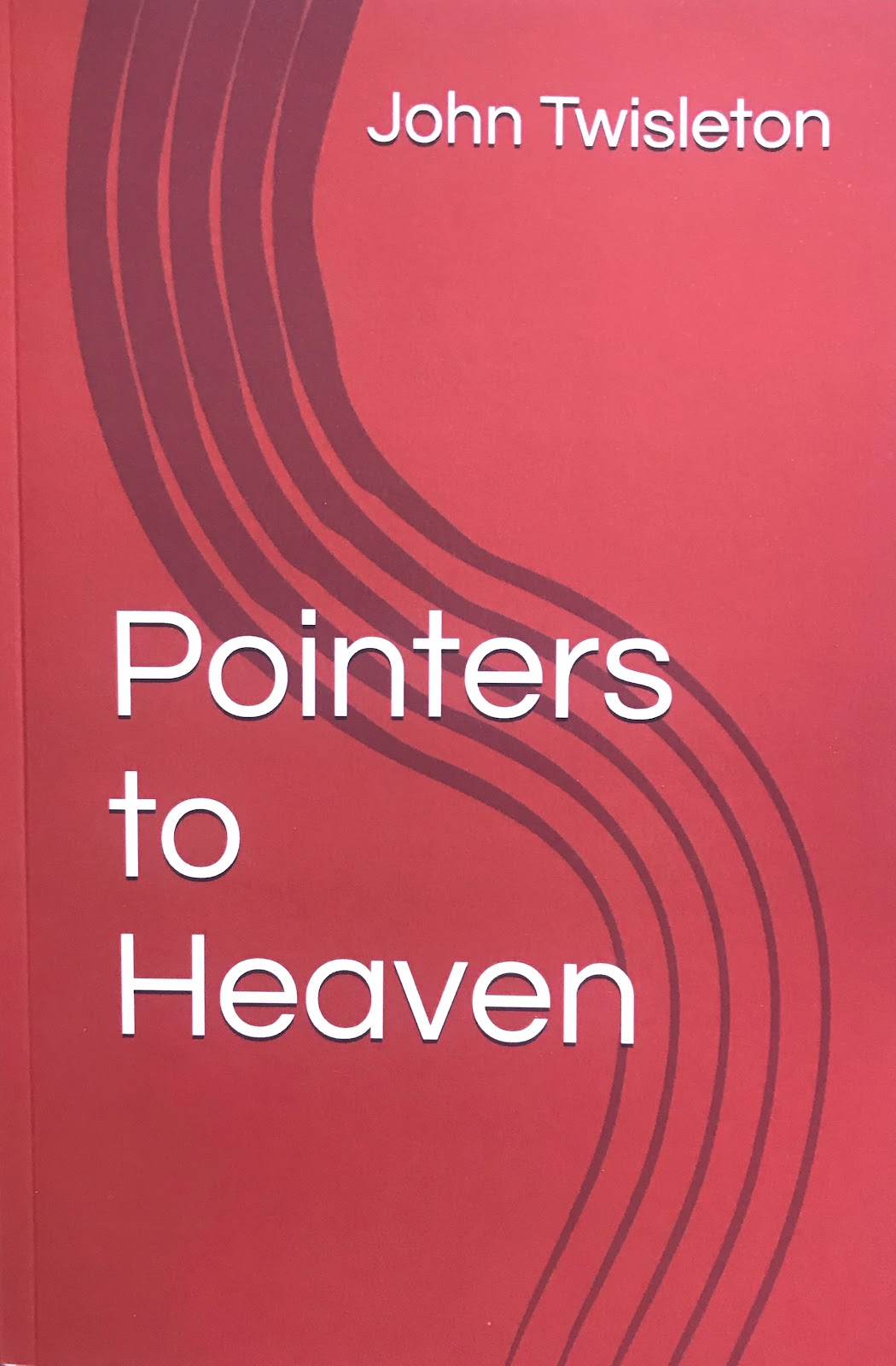
With that thought let’s change gear to look at the Church’s teaching on the afterlife, something I’ve been treating in my Premier Christian Radio series build from my book ‘Pointers to Heaven’ (show). A passage like today’s Gospel has a prime place in funeral liturgy but its imagery needs unpacking to unveil ‘the life of the world to come’. 


Such an unveiling happened to me personally fifty two years ago on Michaelmas Day 29th September 1970.  I was just 21 then and was travelling on my Lambretta from Harwell, where I’d completed some neutron scattering on a polymer specimen, to Oxford. 

As I drove along the front tyre blew and despite repeated application of front and rear brakes the vehicle veered across the road into the path of a lorry. I said what I thought were my last prayers. Amazingly I passed just in front of the lorry landing on the kerb with a sprain to my thumb and shoulder and lived to tell the tale. Coming so close to death made for a fuller evaluation of the significance of my life. It contributed no doubt to a radical career switch a few years later from polymer scientist to parish priest.


My interrupted journey - it entailed a brief visit to hospital - pointed me beyond my own pursuit of truth as a scientist to Truth’s pursuit of me. Heaven came close. It  became more real to me, especially as the accident occurred on 29th September, Feast of St Michael and All Angels. As for many, God became real to me not through thinking or feeling but through circumstances that stopped me literally in my tracks. It was natural to interpret my survival to divine intervention through an angel steering my scooter a shade. I lived on, and continue to live on, aware of an unseen realm, how it pierces through on occasion into our life experience, especially at Holy Mass, and will accompany us as we look to the Lord on the day of our death.


‘May the angels lead you into paradise; may they… receive you and with Lazarus, once poor, may you have eternal rest’.


A few thoughts to conclude on the Christian doctrine of judgement.


Christian tradition distinguishes an individual judgement at the moment of death and a general judgement which completes God’s righteous task at the Lord’s return when the dead are raised in body as well as soul. After death scripture speaks of two ultimate destinies, heaven and hell, although there is a qualification that no one dying with unrepented sin can face the Lord without cleansing, since no unclean thing shall enter his presence as stated in Revelation 21v27. This is the origin of the doctrine of purgatory which speaks of the need for the faithful departed to be purged or cleansed of residual sin to come close to God. 


Our minds argue against judgement because they think they know best.  Actually God knows best in the end.  When we look into the eyes of Christ at his return there will be pain, but an ‘if the cap fits, wear it’ sort of pain. Purgatorial pain may be as short as that. Our wrong actions affront God in his holiness but he has given us a remedy in repentance. Hell, refusal to face God, will be our choice. As the video of my life is prepared for showing on judgement day Christ has power to edit out the unacceptable points if I give them to him. Mercy triumphs over judgement when we repent and allow Christ a place in our hearts! 


‘There is no condemnation for those who are in Christ Jesus’ we read in Romans 8v1. God looks on those who are in Christ with the same love with which he looks upon his Son. Judgement has in a profound sense been passed already for those who have accepted God’s judgement on their lives. To accept one’s sinfulness and inadequacy is in the Christian tradition the pathway to joyful freedom. Such acceptance springs from the vision of God given in Jesus Christ we celebrate at every Mass, vision of a God of majesty, yes, but also a God more concerned to give us what we need than to give us what we deserve.


To believe in Jesus Christ who ‘will come to judge the living and the dead’ is therefore to face the future with an infectious hope. If faith shows you that the whole world is in God’s hands so is its future. 


Christianity provides a deep sense of certainty that any perceived triumph of evil will be seen ultimately as an illusion. All will come right in the end because in the end there will be the grace and truth of Jesus Christ (John 1v14, 17). 


Ultimately there will be grace – mercy - for repentant sinners and truth to prevail over all who live and act deluded by falsehood.


‘May flights of angels sing thee to thy rest’ is an aspiration drawn from today’s Gospel suited to Lazarus and to our late Queen Elizabeth whose Christian faith coloured the superb Anglican liturgy the nation shared on Monday. Like her, may we live watchful of our thoughts, words and deeds, accountable to God day by day until the hour our guardian angels come to carry us home.


I conclude with John Donne’s prayer used at the Queen’s funeral which implies the angels’ help bringing us to God after death: ‘Bring us, O Lord God, at our last awakening into the house and gate of heaven, to enter into that gate and dwell in that house, where there shall be no darkness nor dazzling, but one equal light; no noise nor silence, but one equal music; no fears nor hopes, but one equal possession; no ends nor beginnings, but one equal eternity: in the habitations of thy majesty and glory, world without end. Amen.’

Wednesday, 11 August 2021

St Wilfrid, Haywards Heath & Holy Trinity, Cuckfield Mount Nebo 11.8.21

‘Moses went up from the plains of Moab to Mount Nebo, to the top of Pisgah, which is opposite Jericho, and the Lord showed him the whole land… The Lord said to him, "This is the land of which I swore to Abraham, to Isaac, and to Jacob, saying, "I will give it to your descendants'; I have let you see it with your eyes, but you shall not cross over there." Then Moses, the servant of the Lord, died there in the land of Moab, at the Lord's command. He was buried in a valley in the land of Moab… but no one knows his burial place to this day’ (Deuteronomy 34:1-4).

One advantage of visiting the Holy Land is that for the rest of your life scripture passages come alive in a special sense as you recall the geography. Today’s first reading is such a passage for me. In May 2005 I took part in an ecumenical pilgrimage to Jordan, Lebanon and Syria which has placed those troubled lands much on my heart.  The Jordan leg of our pilgrimage led us to Mount Nebo where Moses viewed the Promised Land as recorded in today’s reading from Deuteronomy 34. He is presumed to have died near to this visit and indeed ‘no one knows his burial place to this day’. If they did Jews, Christians and Muslims would flock to it.


Today people talk of Moses’s Promised Land as the ‘over-promised land’ of which you become very aware from Mount Nebo as you look down from Jordan across to Jericho in the State of Israel. At night the lights of Jerusalem are visible. As pilgrims, Orthodox, Roman Catholic and Anglican within the True Life in God network we concelebrated Mass in the excavated basilica on Mount Nebo, an extraordinary privilege allowed on the retreat. I recall being in the midst of scores of priests looking down from the altar across something like a five hundred strong assembly of God’s people towards the west door and the Promised Land beyond. My thoughts and prayers were of how the Lord was to lead us forward from that place as individuals, Christian communities and denominations aspiring for the promised land of heaven. 


As we reflect on our scripture for today we are reminded that we are God’s people in succession to those Israelites and we are more fully so as we look to what God has on the horizon for us as churches and individuals. We attain that in company with one another, looking to the faith of the church through the ages and to one another right across Christian traditions. As we heard in the Gospel from Matthew 18:19-20 ‘Truly I tell you, if two of you agree on earth about anything you ask, it will be done for you by my Father in heaven. For where two or three are gathered in my name, I am there among them’. 


We are gathered this morning as if on Mount Nebo sensing God’s leading in our lives and in our Christian community, straining forwards to the promise of glory anticipated through the eucharist. ‘O Christ whom now beneath a veil we see may what we thirst for soon our portion be to gaze on thee unveiled and see your face, the vision of your glory and your grace’ (Thomas Aquinas) 


Father we are your people, called by you and destined to inherit your promises. As you kept faith with Moses keep faith with us as trust you for the best future as individuals and as a Christian community. Lord hear us


We pray for Martin our bishop, [the one destined to be our parish priest/Michael our priest] and all Christian leaders especially Justin our Archbishop, Pope Francis, Patriarch Bartholomew and the leaders of the Evangelical Churches that together they may steer your people towards the best provisions on our pilgrim way. Lord hear us


We pray for the Christian communities in [Cuckfield/Haywards Heath] that leaders and members will connect up more so that our joint mission of service and witness to Jesus our Saviour may be the more effective. Lord hear us


Remember, Lord, all those in trouble, sorrow, need, sickness or any other adversity, especially those who have asked our prayers. Lord hear us.


Joining with Our Lady, [St Wilfrid], St Clare and all the saints we commend to you those who have died and all whose anniversaries fall at this time. Lord hear us.   


Merciful Father accept these prayers for the sake of your Son, our Saviour Jesus Christ. Amen

Friday, 22 May 2020

St Richard, Haywards Heath Easter 5 10th May 2020

How often do you think of heaven?  ‘In my Father’s house are many dwelling-places’ Our Lord says in today’s Gospel from John 14. ‘I go and prepare a place for you’.


When I think of heaven - and I’ve been doing a bit thanks to COVID 19 - I find thinking goes some way. Our reasoning powers can trace experiences of goodness, truth, beauty, holiness and love to find in them pointers to heaven. Suffering, strangely, builds on this reasoning, as does experience of the supernatural. My reasonable thought about heaven though needs the aid of the revelation of God provided in Jesus Christ. That aid is given us this morning in the promises of scripture, the fact we’re gathered despite COVID to celebrate the resurrection, and in the eucharist itself a foretaste of heaven.


Easter season is queen of church seasons on account of its heavenward focus. Even so every Sunday the Lord’s people gather on the Lord’s day round the Lord’s table - ‘This is the day that the Lord has made’, says the Psalmist, ‘let us rejoice and be glad in it. Alleluia!’ (Psalm 118:24)!


True to this holy season, though you can’t see my hands pointing today, I want to use words to point instead in summary of my book ‘Pointers to Heaven’ launched Thursday on Amazon with Bishop Martin’s blessing. 

First of my ten pointers is goodness, and I see that in many here at St Richard’s. I think, if she or he is so good, what must perfect goodness be like for Hebrews 12:23 speaks of our being made perfect in heaven? Then as a former scientist who researched the truth of plastics I see the truth of matter’s design pointing to Mind existing before matter, the truth of God’s mind ‘the way, the truth and the life’ (John 14:6) who’s placed discovery of heaven ahead of us. 


Goodness, truth, beauty, holiness, love all five point us beyond this world. I wouldn’t be preaching this morning without encountering a holy priest when I was a young man. Something otherworldly about Fr Hooper reached into my soul drawing me to ordination through a strengthening of faith in ‘the communion of saints, the forgiveness of sins, the resurrection of the body and life everlasting’ (Apostles Creed).


Suffering, strangely, builds on reasoning so far. If there were no God or heaven suffering we bear or see daily on TV would be unconscionably dreadful in its meaninglessness. Alongside suffering, occasional experience of the supernatural points seventhly beyond this world. Throughout my life I’ve been blessed to experience answers to prayer, even the prayer ‘God if you’re there show yourself’. My prayer for St Richard’s as we approach Pentecost is that the Holy Spirit may anoint each and every one of us in answer to such a prayer - Come, Holy Spirit!


My last three pointers to heaven are scripture, the resurrection of Our Lord and worship. With a science background I’m familiar with testing theories by experiment. You can test God’s promises in the Bible like those for guidance, peace of mind or answered prayer. I can’t yet test his promise of future glory but I’m happy to extrapolate the curve on the ‘graph’ of God’s loving faithfulness from all the experimental data I’ve collected in my Christian life. Similarly though Christ’s resurrection goes beyond reason I am convinced of it as a reasonably evidenced historical event. Then the last revelation is what we are about in worship this morning, with angels, and archangels and all the company of heaven. ‘The Lord’s people gather on the Lord’s day around the Lord’s table’, as preview of forthcoming attractions. Blest indeed we are called here to the supper of the Lamb anticipating heaven’s supper to be spread out for us at the fulfilment of all things!  


Alleluia, Christ is risen - he is risen indeed, alleluia!

Wednesday, 18 September 2019

Trinity 15 (26C) St Bartholomew, Brighton 29.9.19

In paradisum deducant te angeli. ‘May the angels lead you into paradise; may they receive you and with Lazarus, once poor, may you have eternal rest’.

Those beautiful words from our funeral liturgy capture movement of the soul from earth to heaven parallel to the carriage of the body to earth. They are built from today’s Gospel of Dives and Lazarus and they provide opportunity for reflection on our ultimate destiny as believers. 

In the Gregorian chant for this closing rite of Requiem Mass the melodic highpoint comes on the name of Lazarus, the poor beggar in Our Lord’s parable. The musical lifting is pointer to the poor man’s lifting, Lazarus ‘was carried by the angels to be with Abraham’.

In today’s parable Our Lord takes an age old story of the reversal of riches and poverty in the afterlife to challenge ‘those among the Pharisees who loved money’ reminding us how those who care nothing for those less fortunate than themselves will receive harsh judgement from God in the life to come.

It’s an uncomfortable piece of scripture underlined by today’s first reading from Amos challenging those who lounge in luxury. I remember Cardinal Hume saying after visiting famine victims in Ethiopia how today’s Gospel haunted him more than any other passage in the Bible. It’s hard to shake off its force. Given our knowledge through the media of needs in Yemen and elsewhere are we not like Dives - Latin for the money-loving man in the story - unless we give at times to help famine relief?

With that thought let’s change gear to look at the Church’s teaching on the afterlife, something last year’s Unbelievable? group considered as we went through the last paragraph of the Creed. A passage like today’s Gospel has prime place in funeral liturgy but its imagery needs unpacking to unveil ‘the life of the world to come’. 

Such an unveiling happened to me personally forty nine years ago on this day, Michaelmas Day 29th September 1970.  I was just 21 then and was travelling on my Lambretta from Harwell, where I’d completed some neutron scattering on a polymer specimen, to Oxford. As I drove along the front tyre blew and despite repeated application of front and rear brakes the vehicle veered across the road into the path of a lorry. I said what I thought were my last prayers. Amazingly I passed just in front of the lorry landing on the kerb with a sprain to my thumb and shoulder and lived to tell the tale. Coming so close to death made for a fuller evaluation of the significance of my life. It contributed no doubt to a radical career switch a few years later from polymer scientist to parish priest.

My interrupted journey - it entailed a brief visit to hospital - pointed me beyond my own pursuit of truth as a scientist to Truth’s pursuit of me. Heaven came close. It  became more real to me, especially as the accident occurred on 29th September, Feast of St Michael and All Angels. As for many, God became real to me not through thinking or feeling but through circumstances that stopped me literally in my tracks. It was natural to interpret my survival to divine intervention through an angel steering my scooter a shade. I lived on, and continue to live on, aware of an unseen realm, how it pierces through on occasion into our life experience, especially at Holy Mass, and will accompany us as we look to the Lord on the day of our death.

‘May the angels lead you into paradise; may they… receive you and with Lazarus, once poor, may you have eternal rest’.

A few thoughts to conclude on the Christian doctrine of judgement, some of which we shared during November’s Creed group.

Can there really be a final catalogue of wrongdoing?  Surely there can! As surely as a computer memory contains a million records, the memory of God is established.  To him all hearts are open and all desires known. Furthermore, and this is the good news Christians know, by his sharing in our nature and his boundless compassion Jesus Christ is well appointed to judge the living and the dead.  Did he not welcome and put the best slant on thieves and prostitutes, always ready to treat people as better than they were? As believers in such love can we fear meeting Our Lord face to face?

Christian tradition distinguishes an individual judgement at the moment of death and a general judgement which completes God’s righteous task at the Lord’s return when the dead are raised in body as well as soul. After death scripture speaks of two ultimate destinies, heaven and hell, although there is a qualification that no one dying with unrepented sin can face the Lord without cleansing, since no unclean thing shall enter his presence as stated in Revelation 21v27. This is the origin of the doctrine of purgatory which speaks of the need for the faithful departed to be purged or cleansed of residual sin to come close to God. 

Our minds argue against judgement because they think they know best.  Actually God knows best in the end. When we look into the eyes of Christ at his return there will be pain, but an ‘if the cap fits wear it’ sort of pain. Purgatorial pain may be as short as that. Our wrong actions affront God in his holiness but he has given us a remedy in repentance. Hell, refusal to face God, will be our choice. As the video of my life is prepared for showing on judgement day Christ has power to edit out the unacceptable points if I give them to him.   Mercy triumphs over judgement when we allow Christ a place in our hearts! 

‘There is no condemnation for those who are in Christ Jesus’ we read in Romans 8v1. God looks on those who are in Christ with the same love with which he looks upon his Son. Judgement has in a profound sense been passed already for those who have accepted God’s judgement on their lives. To accept one’s sinfulness and inadequacy is in the Christian tradition the pathway to joyful freedom. Such acceptance springs from the vision of God given in Jesus Christ we celebrate at every Mass, vision of a God of majesty, yes, but also a God more concerned to give us what we need than to give us what we deserve.

To believe in Jesus Christ who ‘will come to judge the living and the dead’ is therefore to face the future with an infectious hope. If faith shows you that the whole world is in God’s hands so is its future. 

Christianity provides a deep sense of certainty that any perceived triumph of evil will be seen ultimately as an illusion. All will come right in the end because in the end there will be the grace and truth of Jesus Christ (John 1v14, 17). 

Ultimately there will be grace – mercy - for repentant sinners and truth to prevail over all who live and act deluded by falsehood.

On this his Feast we end by invoking St Michael to protect us from any such delusion, especially the neglect of the poor, conscious or unconscious, using a prayer that used to be said to the Archangel after every Mass. My prayer ends with a threefold plea to the heart of Jesus which I invite you to repeat with me.

Holy Michael, Archangel, defend us in the day of battle; be our safeguard against the wickedness and snares of the devil. May God rebuke him, we humbly pray; and do thou, Prince of the heavenly host, by the power of God thrust down to hell, Satan and all wicked spirits who wander through the world for the ruin of souls. Amen.

Most sacred heart of Jesus have mercy on us! Most sacred heart of Jesus have mercy on us! Most sacred heart of Jesus have mercy on us


Saturday, 16 June 2018

St Mary, Balcombe Trinity 3 (11B) 17th June 2018

In Dostoyevsky’s classic novel The Brothers Karamazov two brothers argue about the evil in the world and whether there is ultimate justice. The debate comes to a point where one of the brothers says he is so outraged by the suffering of children that, given a place in heaven, he would refuse it in protest. The other brother replies by pointing to the suffering of Jesus. Does God expect anything of us that he has not been through himself? The judge of the world is not aloof, he has come to us, been one of us, suffered with and for us, only without sin.

In Christian faith Jesus Christ will provide the ultimate righting of wrongs for he will come to judge the living and the dead. As Paul states in our first reading from 2 Corinthians Chapter 5 and verse 10: all of us must appear before the judgment seat of Christ, so that each may receive recompense for what has been done in the body, whether good or evil.


How are we to understand this teaching?

God has invested in the human race.  One day he will get a return on that investment.  To believe in the judgement of the living and the dead is to believe in the coming of God’s kingdom and the trumping of the rule of evil and injustice in this world by God at Christ’s return which is a process working out in history - the detente between the US and North Korea is part of this with our ongoing prayer that detente works! The two parables of seed sown and the mustard seed in today’s Gospel from Mark Chapter 4 illustrate that historical process from small beginning to grand ending.

Jesus Christ died for all, Paul writes in verse 15 of the epistle so that those who live might live no longer for themselves, but for him who died and was raised for them. Jesus came, died and rose but has yet to complete his great and saving purpose we’re all part of, along with everyone and everything. In a bible image from Ephesians this purpose and process is the seeking of a bride by a heavenly bridegroom. To the eye of Christian faith the whole of human and cosmic history has this purpose: to prepare a holy people for God’s possession. The church is this, a bride being prepared without spot or wrinkle (Ephesians 5v27) for a heavenly destiny when her Lord comes again. In this eternal perspective all the sufferings of this world endured in faith will work for good for those who love the Lord (Romans 8v28)

Christ had died!  Christ is risen! Christ will come again!  This is Christian faith and it brings an assurance that evil’s triumph in this world will end. God will turn the wrath of humanity to his praise by building up the body of Christ as a people for his own possession (1 Peter 2v9).  This is why God invested in the human race by creating us and sending Jesus to draw the destructive sting of evil from us through his cross and through the sending of the Holy Spirit

How can judgement be possible?  Can there really be a final catalogue of wrongdoing?  Surely there can, Christian faith replies. As surely as a computer memory contains a million records, the memory of God is established.  To him all hearts are open and all desires known.  

By his sharing in our nature and his boundless compassion Jesus Christ is well appointed to judge the living and the dead.  It is the love of Christ that urges us on we heard in the epistle. Did not that love put the best slant on thieves and prostitutes, a love always ready to treat people as better than they were?  A love we’re welcoming this morning in Holy Communion showing to us in Bread and Wine manifold and great mercy!

Christian tradition distinguishes an individual judgement at the moment of our death from the general judgement referred to in the epistle which will complete God’s righteous task at the Lord’s return. After death scripture speaks of two ultimate destinies, heaven and hell, although there is a qualification that no one dying with unrepented sin can face the Lord without cleansing since no unclean thing shall enter his presence (Revelation 21v27). This is the origin of the doctrine of purgatory which in its plain sense of the need for the faithful departed to be purged or cleansed of residual sin to come close to God is hard to counter. The other historical understanding of purgatory as a place where the closeness to God of the departed can be engineered or even bought by appropriate religious services or exercises was rightly opposed at the reformation.

How could God inflict pain?  

Our minds argue against judgement because they think they know best.  Actually God knows best in the end.  When we look into the eyes of Christ at his return there will be pain, but an if the cap fits wear it sort of pain.  Hell will be our choice.  Our wrong actions are an affront to God but he has given us a remedy.  

As the DVD of my life is prepared for showing on judgement day Christ has power to edit out the unacceptable points if I give them to him.   Mercy can triumph over judgement if we will allow Christ a place in our hearts!

There is no condemnation for those who are in Christ Jesus Paul writes elsewhere to the Romans in Chapter 8 verse 1. God looks on those who are in Christ with the same love with which he looks upon his Son.  Judgement has in a profound sense been passed already for those who have accepted God’s judgement on their lives. To accept one’s sinfulness and inadequacy is in the Christian tradition the pathway to joyful freedom. Such acceptance springs from a vision of God given in Jesus Christ, a God more concerned to give us what we need than to give us what we deserve.

To believe all of us must appear before the judgment seat of Christ is to face the future with an infectious hope. If faith shows you that the whole world is in God’s hands so is its future. Christianity provides a deep sense of certainty that any perceived triumph of evil will be seen ultimately as an illusion. All will come right in the end because in the end there will be the grace and truth of Jesus Christ (John 1v14, 17). Ultimately there will be grace – mercy - for repentant sinners and truth to prevail over all who live and act deluded by falsehood.

So to God, Father, Son and Holy Spirit be all might, majesty, dominion and power now, henceforth and to the ages of ages. Amen.

Saturday, 26 November 2016

Advent 1 The Return of the Lord 27th November 2016

Therefore you also must be ready, for the Son of Man is coming at an unexpected hour. Matthew 24:44

We're about ends and beginnings this morning, the end of one church year dedicated to mercy and the beginning of another dedicated to the Bible, the end of the ordinary green season and the beginning of the solemnity of Advent season when the Church dresses in purple to contemplate death, judgement, heaven and hell

We dress in solemn purple for the end of man as we always do to face death at funeral liturgies

Death is our enemy, there’s no getting round it, even though Christian faith addresses it directly through faith in Jesus Christ who died, is raised and will come again. I gave a clear statement of Christian faith in regards the last things to our 50 or so visitors on All Souls Day earlier this month which I felt led to repeat to the congregation this morning, so I apologise to a handful of you if you'll be hearing this bit of the sermon for the second time.

It is Christian faith that at the moment of death the soul is judged by God to pass toward one of two ultimate destinations, bliss or loss, heaven or hell. In that passage the prayer of the Church surrounds and helps all those souls the Christian community commends to God who will welcome help, the origin of the maligned term purgatory. 

God wishes nothing or no one to be lost from the sight of his holiness. We imagine the moment of death, however merciful physically through palliative care, will be for most of painful as we come to see God, turning our eyes away at his loving, holy glance. 

His invitation to look him in the eyes, like that of any good parent chastising his child, will be painful on account of our sins. Purgatory can be thought of, some theologians hold, as just momentary. A moment of pain as holiness meets the unrepentant sin within us, then the soul passing on to await the next stage of cosmic history.

Those who die without sin face God, as if in heaven, and begin to see him face to face, but heaven is not yet heaven until that vision is shared in the company of all the saints. Those without love continue their self-chosen loneliness into hell, which God permits as he permits free will, but doesn’t will for them such choices.

The Christian hope is consummated by the return of Jesus Christ. As we shall shortly affirm in the words of the Nicene Creed will come again in glory to judge the living and the dead, and his kingdom will have no end. That final judgement will complete our individual judgement at the moment of death. Scripture indicates the general judgement as bringing humanity of past ages to bodily resurrection to greet Christ’s return and be clothed afresh with the body, to make their heaven fully heaven, or their hell fully hell, in the life of the world to come. In that world the faithful departed will continue in a salvation that is personal, practical, purposeful and permanent. 

We will continue to know personally, only unveiled, the one who so knows and loves us. We will experience the practical benefit of our sins being cast away from us. We will be fully taken into the purpose of God and with permanence. The pains we've suffered will be lost in celestial praise which can only be made perfect once God's purpose for the world is made complete at the return of his Son. 

This teaching has also been the subject of our Premier Christian Radio series from Horsted Keynes which concluded earlier this morning with this clip from Alison Bellack (play programme 4))


I wonder how you see heaven? How often you think of it? When you’re saved it’s natural to look forward to this, the fulfilment of God’s call upon your life.
The great poet Saint Augustine of Hippo described heaven as the time when we shall rest and we shall see, we shall see and we shall love, we shall love and we shall praise. 

He speaks in the plural for salvation’s a shared gift of God in Christ, as Paul indicates when speaking in Ephesians 3v19 of having the power to comprehend, with all the saints, what is the breadth and length and height and depth, and to know the love of Christ that surpasses knowledge, (to) be filled with all the fullness of God.

This fullness is the fullness of salvation.

What I have shared is an outline of Christian salvation projected from the promises of God in scripture which open the eyes of faith to see death as a vanquished enemy for those who hold to the Saviour. 

Christian faith is built on the risen Christ. We do not, as believers, know fully what’s there so much as who’s there after death. Our Lord Jesus Christ - he is there! He is there as sure as he’s the same yesterday, today and forever!

Just as we see the risen Lord behind every crucifix so we see those we love alive with Him beyond the dust.

It is Advent Sunday but it is also the Lord's Day! The same Jesus who came, died, rose and says to us this morning it is the will of him who sent me, that I should lose nothing of all that he has given me, but raise it up on the last day.... Those who eat my flesh and drink my blood have eternal life, and I will raise them up on the last day.  (John 6:38, 54)


Saturday, 27 June 2015

SS Peter & Paul 28 June 2015


I have fought the good fight, I have finished the race, I have kept the faith. From now on there is reserved for me the crown of righteousness, which the Lord, the righteous judge, will give to me on that day, and not only to me but also to all who have longed for his appearing.   
2 Timothy 4:7-8

In these words of Paul handed down by his followers - the style of the letters to Timothy differs from his early letters - we have the last thoughts of a Christian.

How can they speak to our thoughts and deeds today?

I was present last week in St George's Cathedral with 1400 people including 10 bishops, 85 priests and 23 servers for the Solemn Eucharist of the Resurrection for Cornell Jerome Moss, Bishop of Guyana. One of the themes picked up was another phrase from Paul of Cornell's labour not being in vain with much evidence of achievement. 

His work is done, they said. Paul's work is done. One day my work will be done and so will yours. This morning with gratitude and sorrow we recall how Fr Michael’s work is done, rest his soul.

I have fought the good fight, I have finished the race, I have kept the faith would to God that may be true of us as we approach our death.  From now on there is reserved for me the crown of righteousness, which the Lord, the righteous judge, will give to me on that day and ....to all who have longed for his appearing.

That eager longing for the Lord in Paul challenges us this morning as a searching question from God.

How can such words from God speak to our situation today?
When the tide of death washes over the sandcastle of our life all that will remain will be such eager longing love. A solid crown will be placed on that solid longing of love for God and neighbour, so how can we build such longing?

Spending ten days in a so-called underdeveloped nation has made me see development in a new light. We in England have our tight efficient schedules but they in Guyana still have time and they still have God. I have only ever met one Guyanese atheist.

I was reminded of some words of the Jewish martyr Anne Frank on how natural beauty which is so immediate in both Guyana and Horsted Keynes can build faith and longing for God. She writes: The best remedy for those who are afraid, lonely or unhappy is to go outside somewhere where they can be quiet, alone with the heavens, nature, and God. Because only then does one feel that all is as it should be and that God wishes to see people happy, amidst the simple beauty of nature.

Taking time outside, walking the dog and so on, can help build sense of God's presence and longing for him and his appearing to us at Christ's return or at our death. Living among beautiful surroundings is such a privilege, and in the tropics beautiful warm surroundings where people meet all the more. 

St Paul's longing for the Lord was nourished by a personal encounter with Jesus that continued through scripture and sacrament. He is the apostle who hands on so clearly the Eucharist, calling us to faith in Christ's presence there announced so powerfully in the apostolic writings of St John.

That longing we have for Jesus, expressed in a moment as we ascend to the altar for Holy Communion, is fostered at St Giles by the perpetual reservation of the Blessed Sacrament.
Since the sacred elements persist all times at the altar whenever we're in church we can sit and kneel as if at that moment of receiving Communion. When I come into Church I genuflect both to express my faith in that presence and my longing for that to be my be all and end all. We kneel or bow down in Church because we believe and so that we believe.

I have fought the good fight, I have finished the race, I have kept the faith. Faith is a subjective intuition making sense of things but like the Blessed Sacrament it’s not just subjective but objective. The Christian faith is expressed as our confirmation candidates well know in the creed, the seven sacraments, the Ten Commandments and the Lord’s Prayer. It is a holding to and a grateful longing for Jesus Christ as divine Son of God and Saviour. On account of that longing Christians are being put to death across the world this very day.

Would that God’s love so permeated us that it would be unthinkable to deny that there is nothing in creation that can separate us from Jesus Christ, even death, even a martyr's death?

Bishop Cornell served but 5 years in Guyana. He died at 55. Over his short ministry his warmth and compassion greatly uplifted the Diocese showing how one man can make a very great difference in a demanding situation through his keeping close to God. Everyone told me he'd left the Diocese a happier place than it had been when he'd arrived.

Ministering in Horsted Keynes has its real demands and difficulties especially the task of drawing the next generation into this congregation and you and I and Deacon David now have a mighty challenge. What we do with our limited energies is important but our inner joy and longing for the Lord matters more than anything we do. Having something of a break this last two weeks has shown me this personally. Something inside of me has been able to expand, even if I've been following parish admin at a distance through e mail. 

To build longing for the Lord and his appearing we need to build and then protect space for prayer and reading the Bible, for attendance at weekday worship, for service to others and for times of reflection to keep all of this in order. I don't need to list the mighty distractions to building hunger for God in the form of the ‘junk’ food life throws at us. 

Fighting off such spiritual distractions is what’s behind our reading’s call to fight 'the good fight' of the faith. It's about resolving under God that your energies won't be dissipated in lesser things and your strengths will be taken up in what God has for you day by day.

It’s the Lord's Day. New every morning his love rises upon us, but particularly on the day of Resurrection. This morning in company with Peter and Paul we arise afresh in Christ whose light would scatter our inner darkness, the demons that trouble us, our worries and grievances. 

This is the day that the Lord has made says the Psalmist. Let us rejoice and be glad in it. Glad with eager longing for the Lord who gives us this new day and week and ministry in our new Deacon.

We look together to the righteous judge, (who) will give (his crown) to us and.... all who have longed for his appearing. 

Peter and Paul pray for us and for all in whom that longing falters, especially our sisters and brothers under persecution for the name of Our Lord and Saviour, to whom with the Father and the Holy Spirit be ascribed might majesty dominion and power henceforth and for ever more. Amen.